Language
  EN
EN RU
RU ES
ES DE
DE EL
EL IT
IT JA
JA KO
KO PT
PT ID
ID SR
SR UK
UK VI
VI TH
TH TR
TR MS
MS BE
BE AR
ARCommon Rail Injector Pump Test Bench Maintenance Manual Safety Operation Guide
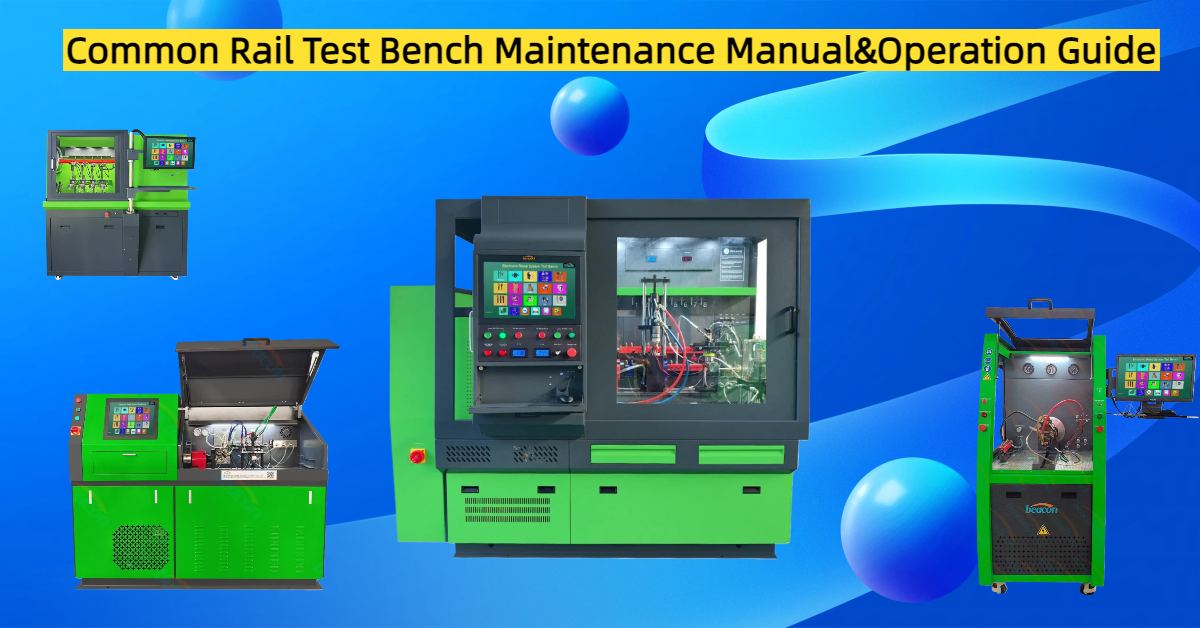
Complete Maintenance & Safety Manual for Common Rail Injector Pump Test Benches
To ensure the longevity of your equipment and the safety of your operators, strictly adhering to the maintenance and usage protocols for your Common Rail Injector/Pump Test Bench is crucial. Below is the comprehensive guide based on industry standards.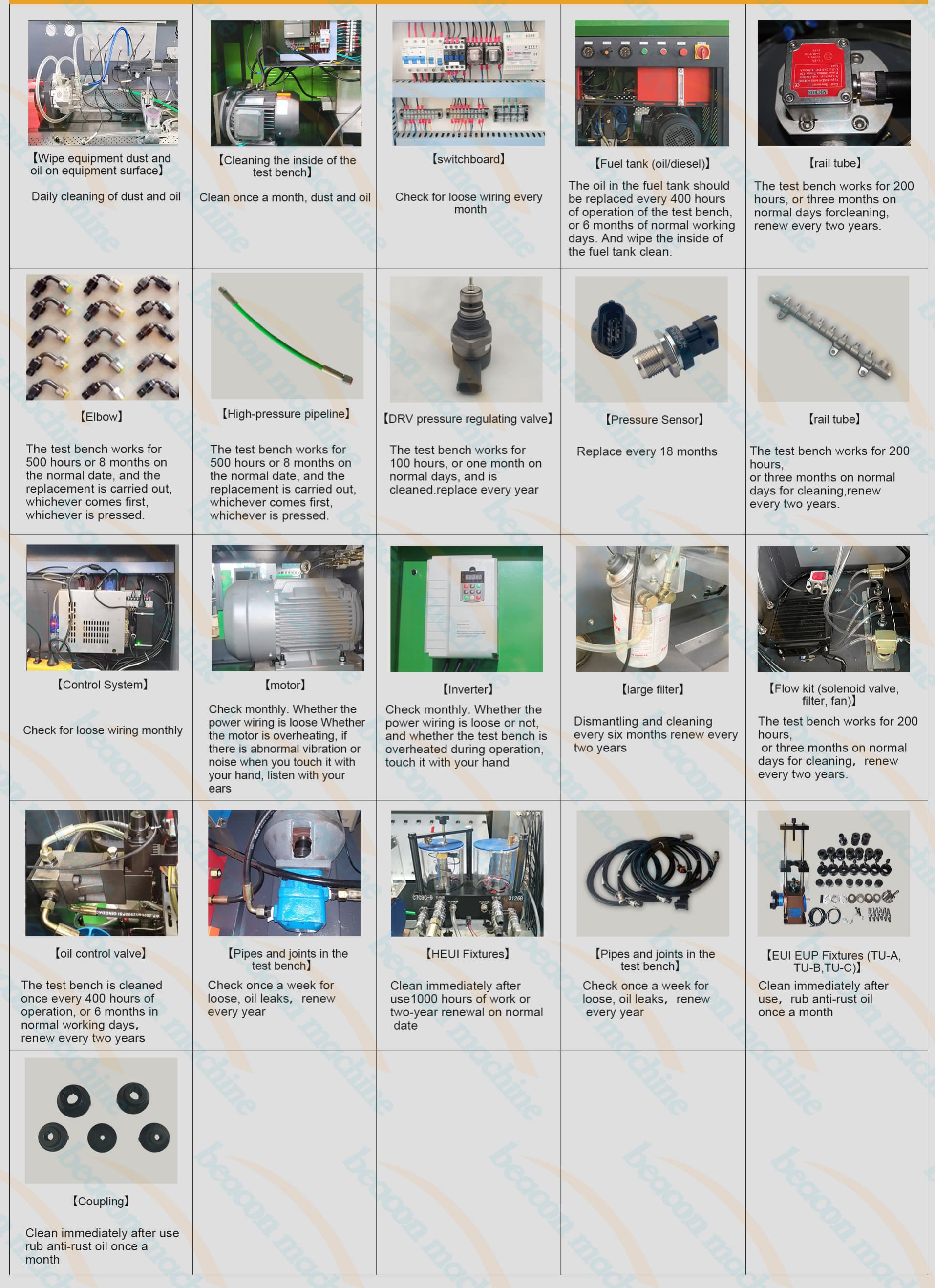
Part 1: Safety Precautions & Operating Environment
Before operating the test bench, all personnel must follow the safety rules relevant to the diesel electronic control system repair industry.
Environmental Hazards: Pay special attention to surrounding factors such as acids, alkalis, toxic gases, heavy objects falling, and flammable materials. A safe environment prevents equipment damage and personal injury.
Liquid Protection: Never spill corrosive liquids like water or diesel onto the LCD screen, the interior of the test bench, or electrical connection points.
Handle with Care: The test bench contains precision electronic instruments. Avoid dropping or impacting the machine.
Electrical Connections: Use screws to fasten harnesses and plugs securely to prevent loose connections. If the screen flickers, turns blue, or glitches, turn off the power immediately and check the external power source before restarting.
Dry Run Protection:Strictly Prohibition: Do not turn on the main power switch if the fuel tank is empty. This prevents the heater from burning out (dry burning).
High-Pressure Safety: The test bench pressure can exceed 2000bar. The safety door of the operation chamber must remain closed during testing.
Start-up Safety: No one is allowed to stand directly in front of the operation chamber during the initial startup or the first run after installing a new injector. This prevents injury from potential high-pressure leaks.
Part 2: Power & Electrical Safety
To ensure stable operation:
Grounding: Use an independent, dedicated socket with reliable grounding.
Voltage Stability: If the power supply voltage is unstable, use a voltage stabilizer.
Regular Checks: Periodically inspect the AC power cord for damage and clean dust from the plug and socket to prevent fire hazards or electric shock.
Emergency Stop: If the controller emits abnormal sounds, smells, or becomes too hot to touch, stop usage immediately and unplug the power.
Part 3: Proper Usage & Care
Protect the Control System: Do not throw, drop, or step on the control system. Avoid inserting foreign objects into connectors.
Cleanliness: Do not touch power terminals with wet hands. Keep dust away from power terminals to avoid short circuits. Always unplug the power cord before cleaning the controller.
Part 4: Detailed Maintenance Cycle Schedule
Regular maintenance is key to accurate testing results. Please refer to the schedule below for cleaning and part replacement.
1. Daily & Weekly Maintenance
Surface Cleaning: Clean dust and oil stains from the equipment surface Daily.
Pipes & Joints: Check for looseness or oil leaks Weekly (Replace yearly).
Drive Harness: Check for breakage or damage Weekly (Replace every 18 months).
2. Monthly Maintenance
Internal Cleaning: Remove dust and oil from inside the test bench Monthly.
Distribution Panel: Check for loose wiring Monthly.
Control System: Check if wiring connections are loose Monthly.
Motor: Check monthly for loose wiring, overheating, abnormal vibration, or noise.
Inverter: Check monthly for loose wiring and overheating.
EUI/EUP CAMBOX & Couplings: Clean immediately after use. Apply anti-rust oil Monthly.
3. Periodic Maintenance & Replacement (Hours/Months)
| Component | Cleaning/Check Interval | Replacement Interval |
| High-Pressure Pipe | - | 500 working hours or 8 months (whichever comes first) |
| Elbows | - | 500 working hours or 8 months |
| DRV Pressure Valve | Clean: 100 hours or 1 month | Replace: Every 1 year |
| Pressure Sensor | - | Replace: Every 18 months |
| Rail Pipe | Clean: 200 hours or 3 months | Replace: Every 2 years |
| Fuel Tank (Oil/Diesel) | - | Change oil: 400 hours or 6 months (Wipe tank interior clean) |
| Flow Sensor | Clean: 100 hours or 1 month | Replace: Every 1 year |
| Diesel Filter | Disassemble & Clean: Every 6 months | Replace: Every 2 years |
| Flow Kit (Solenoid, etc.) | Clean: 200 hours or 3 months | Replace: Every 2 years |
| Oil Regulator Valve | Clean: 400 hours or 6 months | Replace: Every 2 years |
| HEUI Fixture | Clean immediately after use | Replace: 1000 hours or 2 years |
Note: If safety issues persist or technical problems arise, please contact our technical support team immediately. Proper maintenance not only protects your investment but ensures the safety of your workshop environment.
Related products
contact us
TEL: +86-13375386258
Whatsapp:+86-13375386258
Email: jasonzheng@beacon-machine.com
Address: High Tech Industry Zone of East Tai an city,Shandong Province,China