Language
  EN
EN RU
RU ES
ES DE
DE EL
EL IT
IT JA
JA KO
KO PT
PT ID
ID SR
SR UK
UK VI
VI TH
TH TR
TR MS
MS BE
BE AR
ARHow to Test DENSO HP5 and HP6 Common Rail Fuel Pumps: Part Numbers, Applications and Test Bench Setup
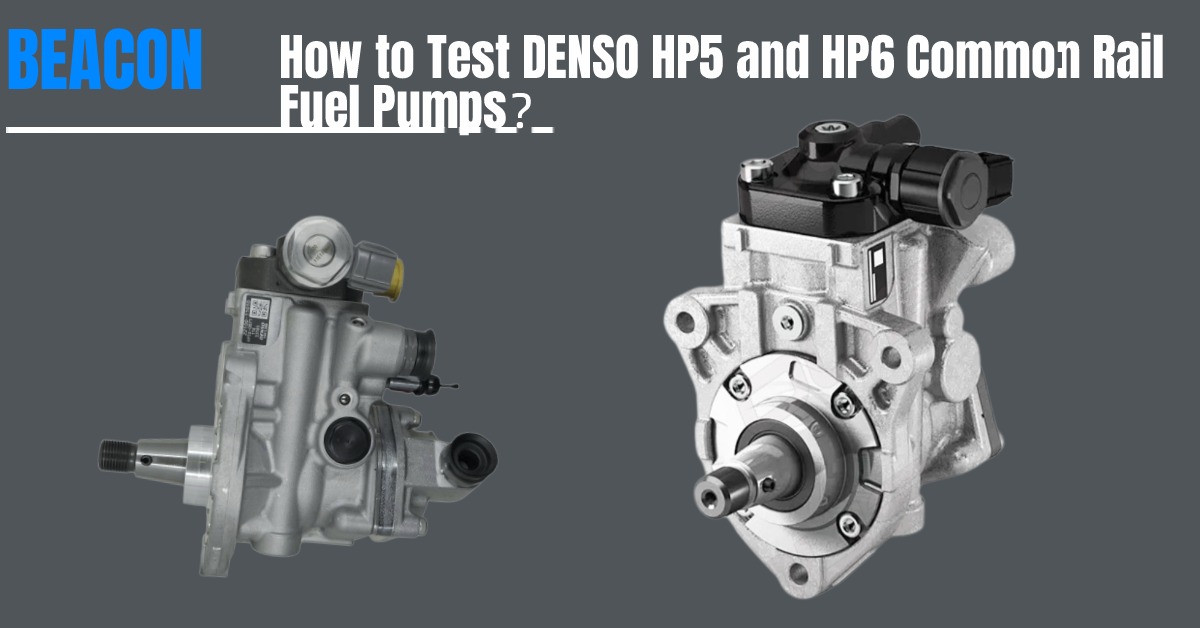
How to Test DENSO HP5 and HP6 Common Rail Fuel Pumps: Part Numbers, Applications and Test Bench Setup
DENSO HP5 and HP6 are high-pressure fuel pump families used in diesel common rail fuel injection systems. They are designed to supply pressurized fuel to the common rail, allowing electronically controlled injectors to deliver fuel according to engine operating conditions.
For diesel injection repair workshops, correctly identifying the pump and selecting the right testing equipment are essential. A test bench may support common rail pump testing in general, but a specific DENSO HP5 or HP6 pump may still require a dedicated fixture, compatible drive connections and the correct test procedure.
This guide explains how DENSO HP5 and HP6 pumps work, how to identify their part numbers, which applications to investigate, and how to test them using a suitably configured Beacon Machine CR708 or CR1017 common rail test bench.
1. What Are DENSO HP5 and HP6 High-Pressure Fuel Pumps?
DENSO develops common rail fuel injection systems for diesel engines. In a common rail system, the high-pressure pump supplies fuel to a shared accumulator called the fuel rail. Electronically controlled injectors then deliver the required quantity of fuel to each cylinder.
According to DENSO's technical information, the HP5 and HP6 families serve different engine and vehicle segments.
DENSO HP5 Common Rail Pump
The HP5 family includes different configurations, such as HP5S and HP5D. DENSO describes the HP5S as a single-cylinder variant and the HP5D as a two-cylinder variant.
Fuel delivery is controlled by a pre-stroke control valve. By controlling the effective pumping process, the system can regulate fuel delivery to meet the engine's operating requirements.
HP5 pumps are associated with passenger vehicles and smaller-capacity commercial vehicle applications. The exact vehicle, engine and pump assembly depend on the specific part number.
DENSO HP6 Common Rail Pump
The DENSO HP6 is designed for higher-capacity diesel engines, typically in the 6–8 litre range. Its applications include commercial vehicles, off-highway machinery and agricultural equipment.
The HP6 design incorporates a mid-pressure pump to supply fuel to two high-pressure pumping chambers. This arrangement supports the fuel delivery requirements of larger engines.
HP6 pumps are not simply interchangeable with HP5 pumps. Their internal configuration, drive arrangement, mounting and test requirements may differ.
Authoritative Technical References
DENSO – Common Rail Pump: https://www.denso-am.eu/products/diesel-components/common-rail-pump
DENSO – Fourth-Generation Common Rail Diesel Technology: https://www.denso-am.eu/news/fourth-generation-common-rail-diesel-technology
These DENSO references explain the basic common rail operating principle and the differences between HP5 and HP6 pump families.
2. How Does a DENSO HP5 or HP6 Pump Work?
The operating principle can be summarized in five stages.
Stage 1: Low-pressure fuel supply
Diesel fuel passes through the fuel supply and filtration system before entering the high-pressure pump.
Stage 2: Fuel metering and pressure generation
The pump receives fuel and uses its internal pumping elements to generate high pressure. Depending on the pump design, a control valve regulates the effective fuel delivery.
Stage 3: High-pressure fuel delivery
The pressurized fuel is delivered to the common rail. The rail stores high-pressure fuel and supplies it to the injectors.
Stage 4: Electronic injection control
The engine control unit coordinates injection timing and quantity according to operating conditions such as engine speed and load.
Stage 5: Pressure and delivery management
The fuel system manages pressure and delivery to support engine performance, starting, combustion and emissions control.
The HP5 and HP6 families share the general common rail principle, but their internal pumping arrangements and specific test procedures are not identical. Always use the correct information for the pump being serviced.
3. Key Part Numbers and Interchange Numbers
Correct part-number identification is one of the most important steps when repairing a DENSO common rail pump.
HP5 and HP6 are family designations, not complete pump assembly part numbers. DENSO pump numbers and vehicle manufacturers' original equipment numbers may refer to different configurations of the same family.
The following table lists useful identification references for parts research and online searches.
| Pump family | Part number or reference | Identification notes |
|---|---|---|
| DENSO HP5S | 294050-#### | DENSO HP5S pump family; the suffix identifies the specific version |
| DENSO HP5D | 299020-#### | DENSO HP5D pump family; verify the complete assembly number |
| DENSO HP5 | 299000-0020 | Example of a pump listed as a DENSO HP5; associated with Kubota reference 1J508-50500 in an aftermarket listing |
| DENSO HP5E | 299090-#### | HP5E family reference; confirm the actual pump identification |
| DENSO HP6 | 299050-#### | DENSO HP6 family reference; the complete suffix is required |
| DENSO HP6 | OEM-specific number | Vehicle or equipment manufacturers may use their own part numbers and cross-references |
The family prefixes above are identification aids, not universal interchange numbers. The #### notation represents a variable suffix and is not an orderable part number.
For example, an aftermarket listing identifies DENSO 299000-0020 as an HP5 pump and lists 1J508-50500 as a related Kubota reference. This single example must not be used to infer that every HP5 pump fits Kubota equipment.
How to Verify Interchange Numbers
Before ordering a replacement pump or test fixture, check:
The complete DENSO part number on the pump label or housing.
The original equipment manufacturer (OEM) part number.
The engine model and serial number.
The vehicle or machine model and production year.
The mounting interface, drive configuration and fuel connections.
The applicable service information and test procedure.
Do not assume that two pumps are interchangeable simply because both are described as HP5 or HP6.
For SEO purposes, publish individual verified part numbers as separate searchable references when you have confirmed the associated applications. Avoid generating unsupported cross-reference lists.
4. Compatible Engines and Applications
DENSO HP5 and HP6 pumps serve different engine categories. The exact application depends on the complete pump number, engine specification and vehicle manufacturer's installation.
The following table provides a practical application guide without assigning unverified pump numbers to individual vehicles.
| Pump family | Typical engine category | Common application category | What to verify |
|---|---|---|---|
| HP5S | Passenger-car and smaller diesel engines | Passenger vehicles and selected light commercial vehicles | Full DENSO number, engine code and OEM reference |
| HP5D | Passenger-car and light commercial diesel engines requiring a different pumping configuration | Passenger vehicles and selected commercial vehicles | Pump configuration, mounting and complete assembly number |
| HP5E | Specific newer-generation diesel applications | Selected passenger-car and industrial applications | Exact HP5E assembly and engine specification |
| HP6 | Approximately 6–8 litre diesel engines | Heavy commercial trucks, off-highway machinery and agricultural equipment | Engine displacement, equipment model and complete pump number |
| HP6 | Heavy-duty diesel applications | Commercial and industrial diesel service | OEM parts catalog and the pump's original calibration requirements |
How to Research Vehicle and Engine Compatibility
When a customer searches for a pump by vehicle or engine model, the most reliable identification process is:
Identify the installed pump by its complete part number.
Identify the engine model and serial number.
Check the vehicle or equipment manufacturer's parts catalog.
Match the original equipment number to the DENSO pump number.
Verify that the replacement pump has the same configuration and required calibration.
For repair shops servicing trucks, construction equipment and agricultural machinery, this process is more reliable than selecting a pump from a broad HP5 or HP6 family description.
Important: A complete, verified vehicle-to-pump cross-reference requires model-specific OEM parts data. Do not infer a particular truck model, excavator model or engine family from the HP5 or HP6 designation alone.
5. Common Symptoms of DENSO HP5 and HP6 Pump Problems
A faulty high-pressure pump can cause several fuel system symptoms. However, these symptoms can also be caused by injectors, filters, fuel supply restrictions, electrical controls or pressure regulation components.
Hard Starting or No Starting
If the fuel system cannot build the required rail pressure, the engine may crank for an extended period or fail to start.
Check the low-pressure fuel supply, air ingress, injector leakage and pressure control system before condemning the pump.
Low Common Rail Pressure
Low rail pressure can indicate inadequate pump delivery, a fuel supply restriction, excessive injector return flow or a pressure control problem.
Compare commanded and actual rail pressure using the appropriate diagnostic equipment.
Reduced Engine Power
A pump that cannot meet fuel delivery requirements under load may contribute to poor acceleration, reduced power or limited engine performance.
Unstable Idle or Acceleration
Unstable operation may be associated with fuel pressure fluctuations, control valve problems, injector faults or other engine management issues.
Abnormal Noise or Contamination
Unusual mechanical noise, metal particles or evidence of internal wear requires careful investigation. Contamination can affect other high-pressure fuel system components, so the entire system may need inspection.
A bench test helps isolate the pump from the vehicle's other fuel system components and provides repeatable measurements under controlled conditions.
6. How to Test a DENSO HP5 or HP6 High-Pressure Fuel Pump
Professional bench testing requires the correct test bench, a compatible dedicated fixture and the appropriate test data.
Step 1: Identify the Pump
Record the complete pump number and any OEM references. Determine whether the unit is HP5S, HP5D, HP5E, HP6 or another configuration.
Do not select a test program based only on the pump family's general name.
Step 2: Inspect the Pump
Check the housing, drive shaft, mounting surfaces, connectors and fuel ports for damage or contamination.
If the pump has experienced a serious internal failure, determine whether disassembly and cleaning are required before testing.
Step 3: Install the Correct HP5 or HP6 Fixture
Secure the pump using a dedicated fixture designed for its particular mounting and drive configuration.
The fixture must provide correct alignment and suitable connections for the fuel supply, high-pressure outlet and any required control or return circuits.
A fixture designed for a different pump model must not be assumed to fit or operate correctly.
Step 4: Connect the Fuel Lines
Connect the required fuel supply, return and high-pressure lines according to the pump's technical documentation and the fixture instructions.
Use suitable fittings and pressure-rated components. Follow the prescribed priming and air-removal procedure.
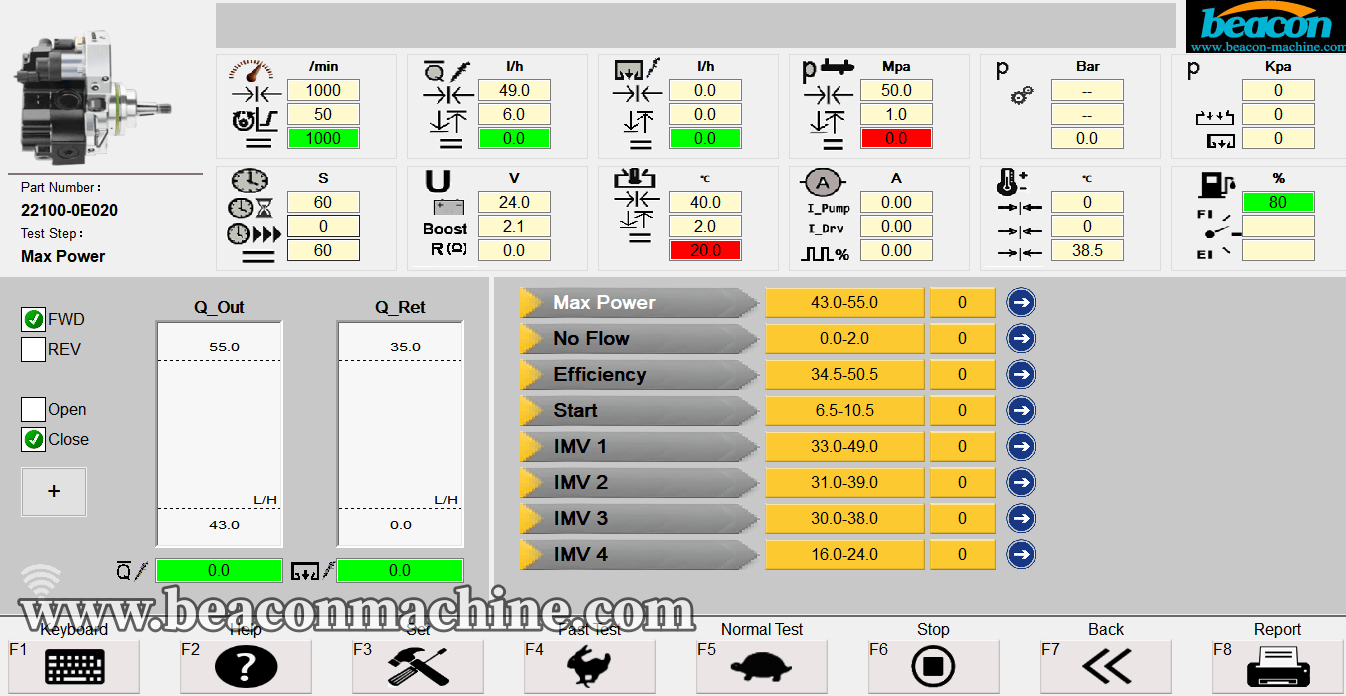
Step 5: Select the Correct Test Program
Choose the applicable pump model and test procedure in the test bench system, where supported.
Use the manufacturer's specified operating conditions, including test speed, pressure, delivery and control settings. Do not copy test values from a different HP5 or HP6 variant.
If the required test data are unavailable, obtain the correct technical information before making a pass-or-fail decision.
Step 6: Check Pump Delivery and Pressure Response
Monitor the parameters supported by the test system and required by the applicable procedure. These may include fuel delivery, pressure response, stability, return flow and leakage.
Check for abnormal vibration, noise or signs of overheating.
Step 7: Compare the Results With Specifications
Evaluate the measured results against the correct acceptance limits for the identified pump. Do not apply a universal pass/fail threshold to every DENSO HP5 or HP6 model.
If the pump fails, investigate the pump itself, test setup, connections and control configuration before deciding on the repair.
Step 8: Record the Test Results
Document the pump number, test program, operating conditions, measurements and final result.
Repeatable test reports help diesel repair workshops demonstrate the quality of their work and make more consistent repair decisions.
Safety note: High-pressure diesel fuel can penetrate skin and cause severe injury. Never check for leaks with your hands. Follow the test bench manufacturer's safety procedures and release pressure safely before disconnecting any lines.
7. Recommended Test Bench: Beacon Machine CR708 and CR1017
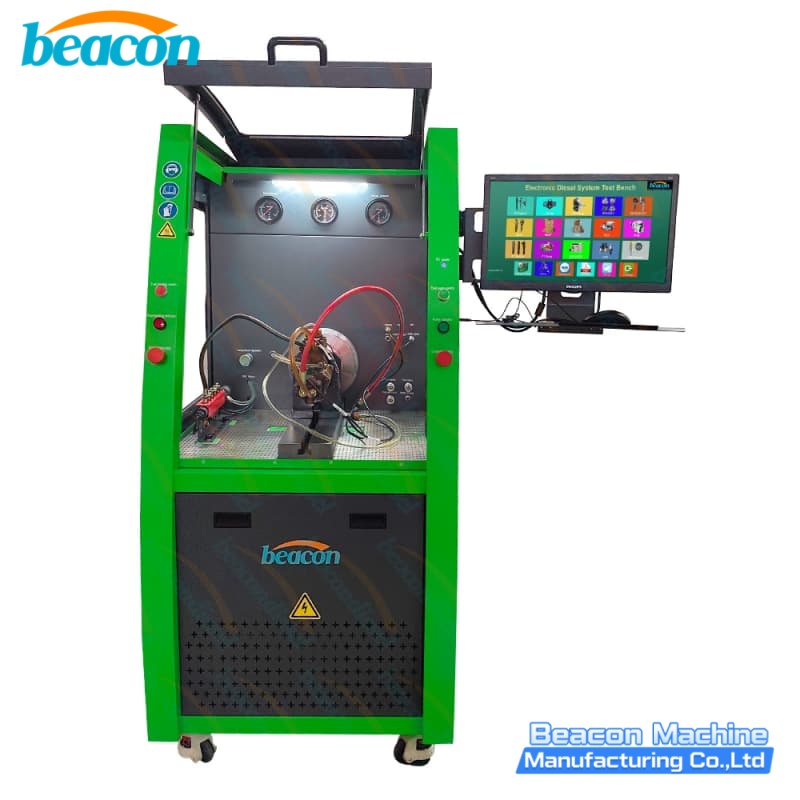
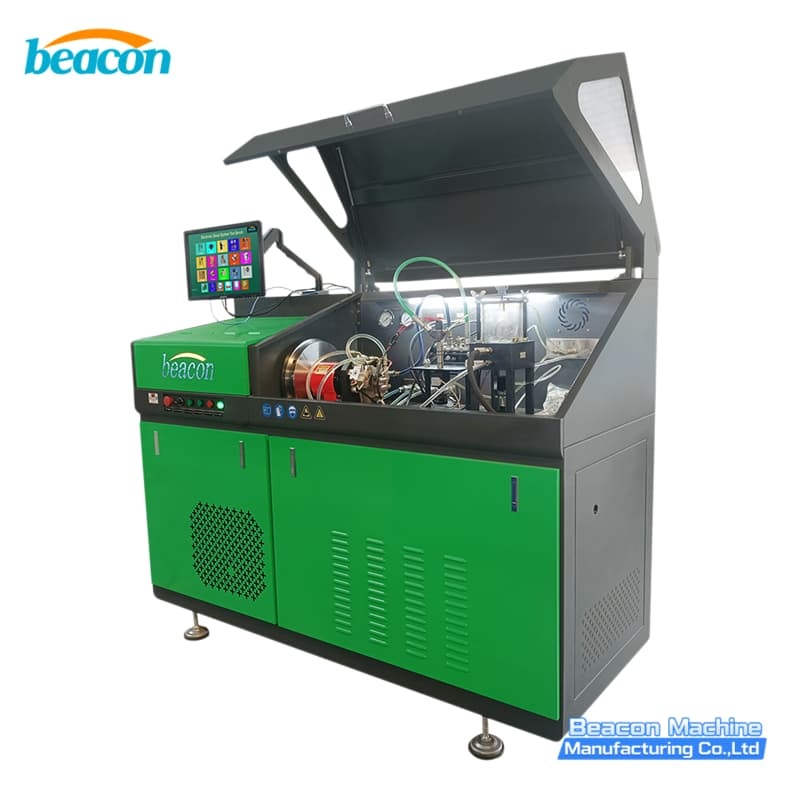
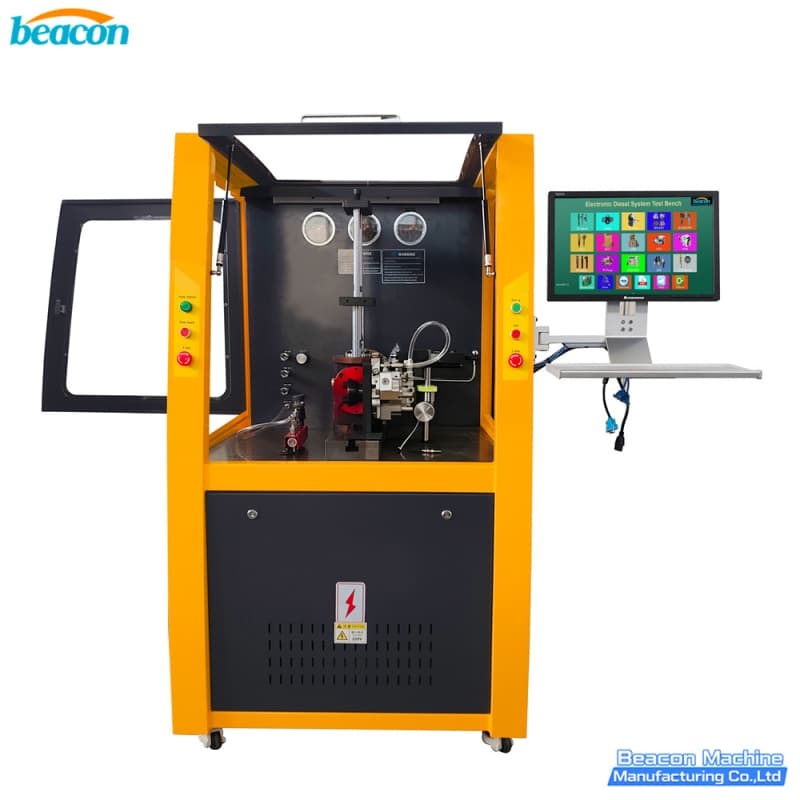
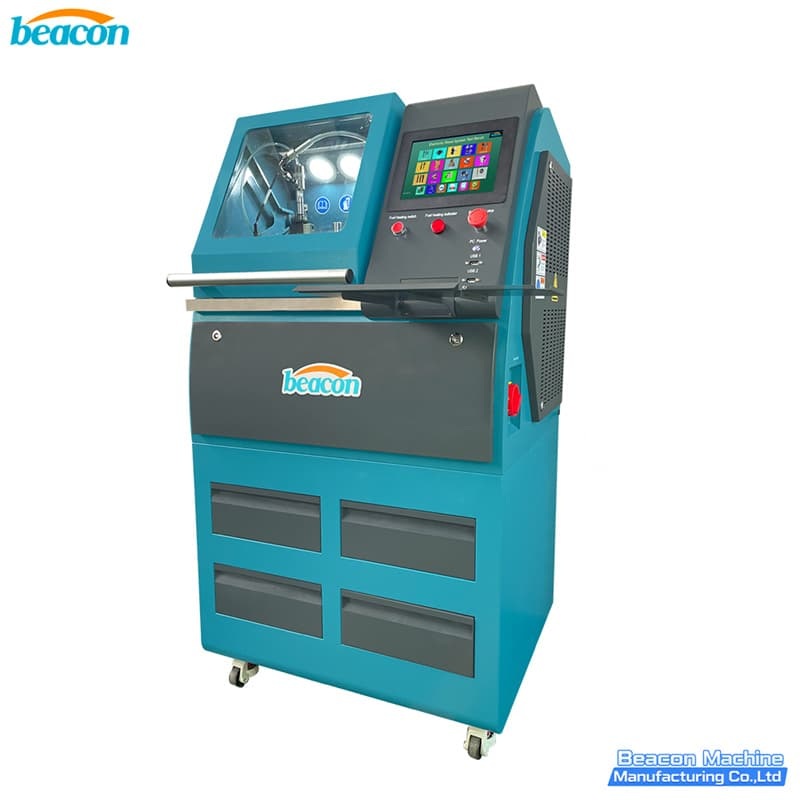
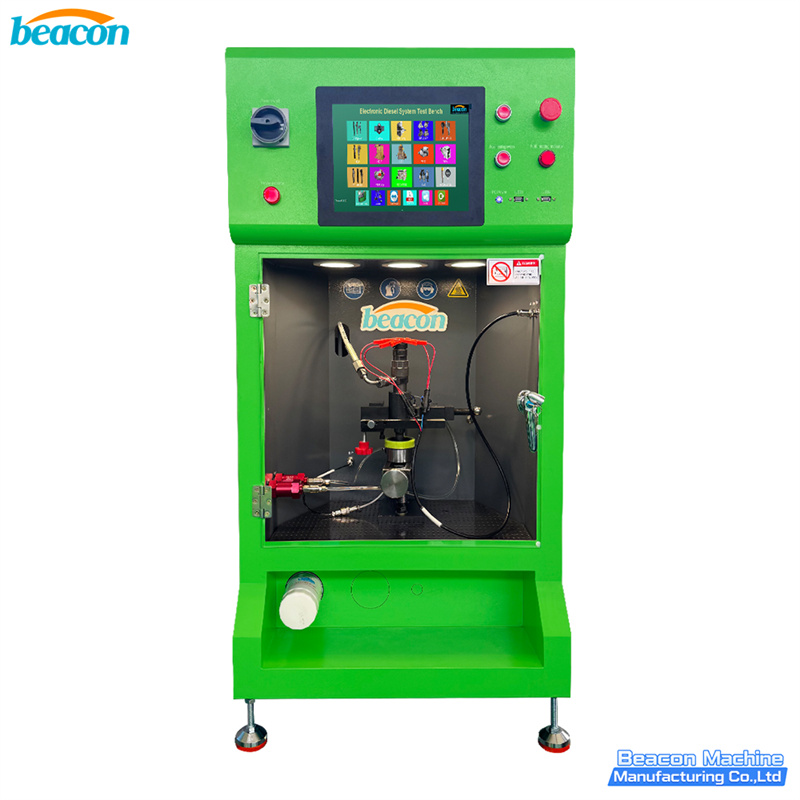
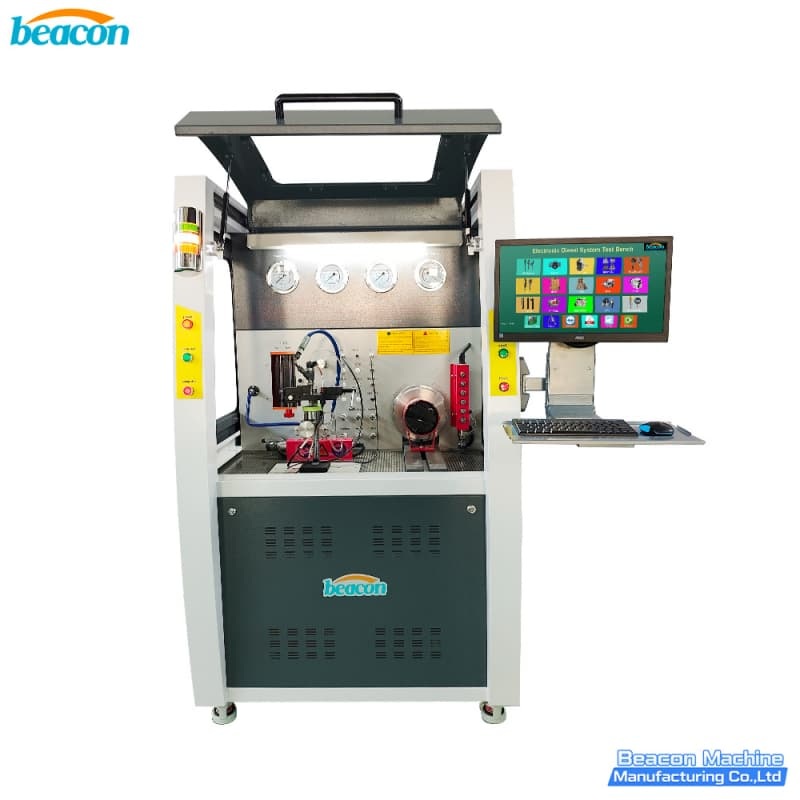
For diesel repair workshops that need to test DENSO HP5 and HP6 common rail fuel pumps, Beacon Machine recommends considering the CR708 or CR1017 test bench with the correct dedicated HP5/HP6 fixture.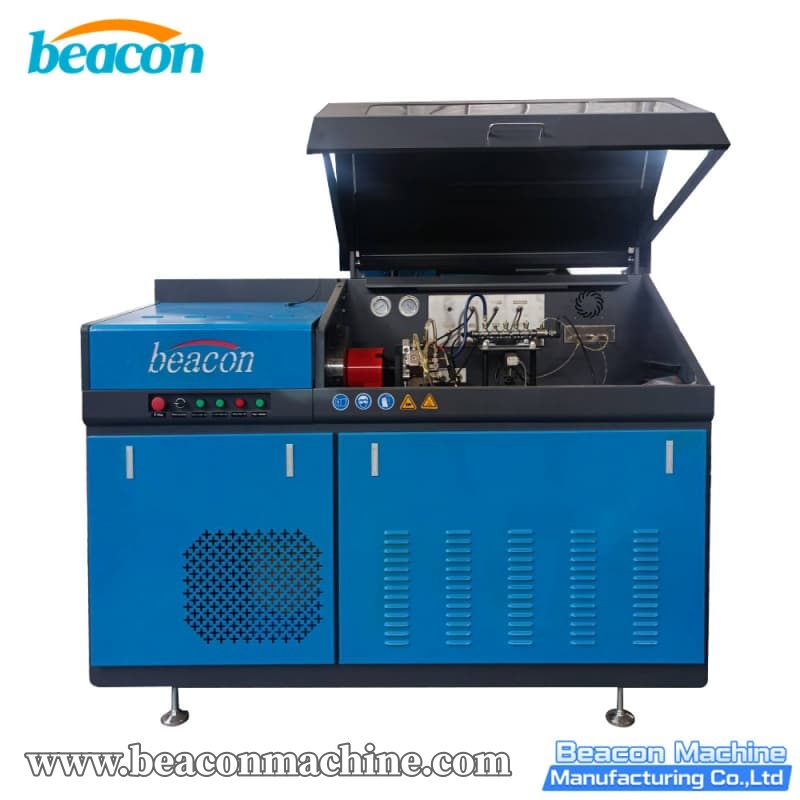
![(}WZW{J`EGE9A[~K_EE%]X2.png](/Uploads/ueditor/image/20261015/6ad041b790f46.png "6ad041b790f46.png")
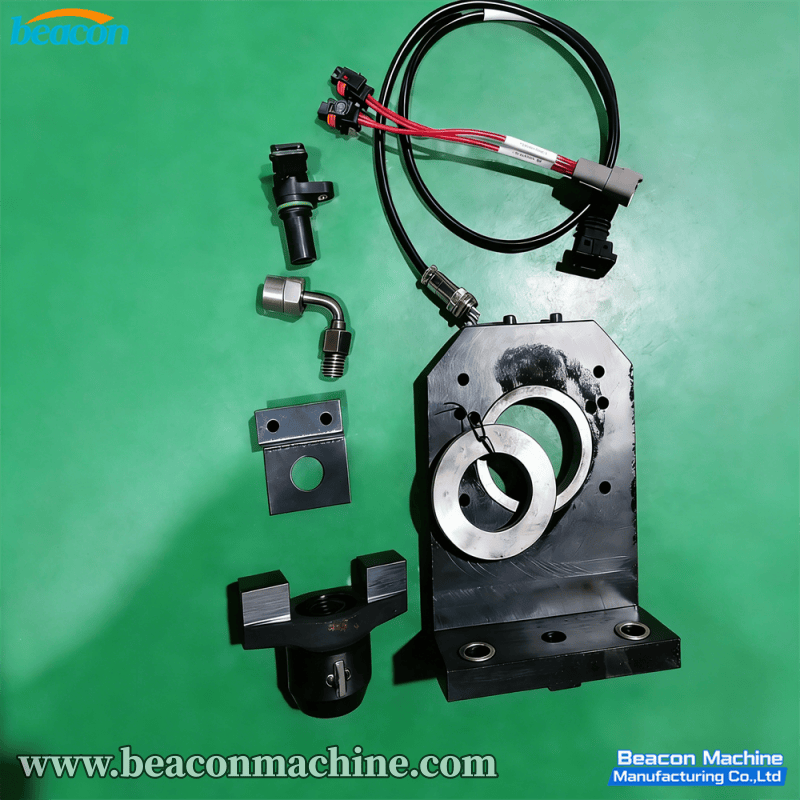
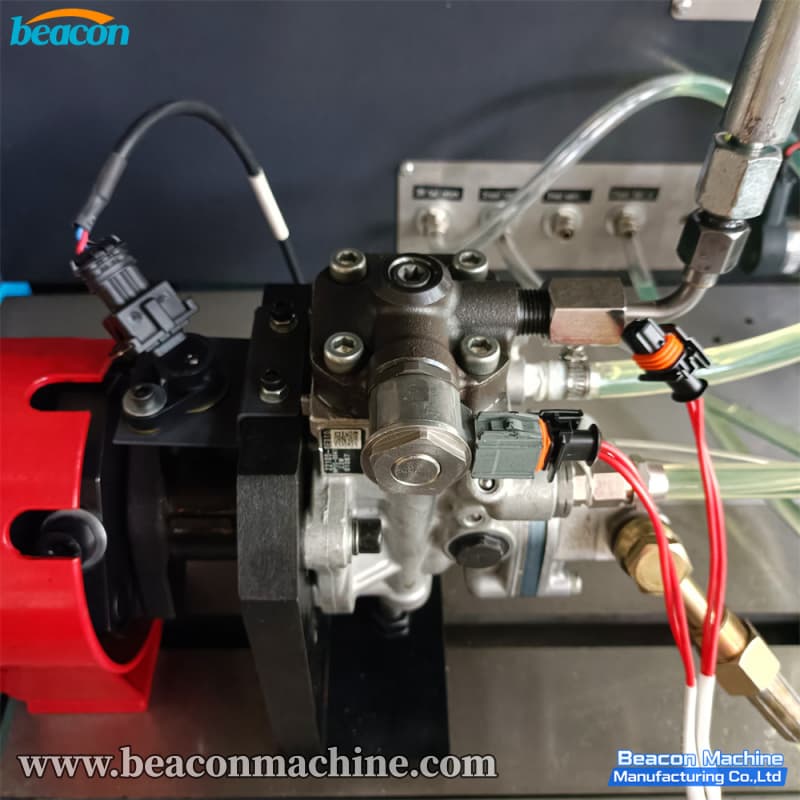
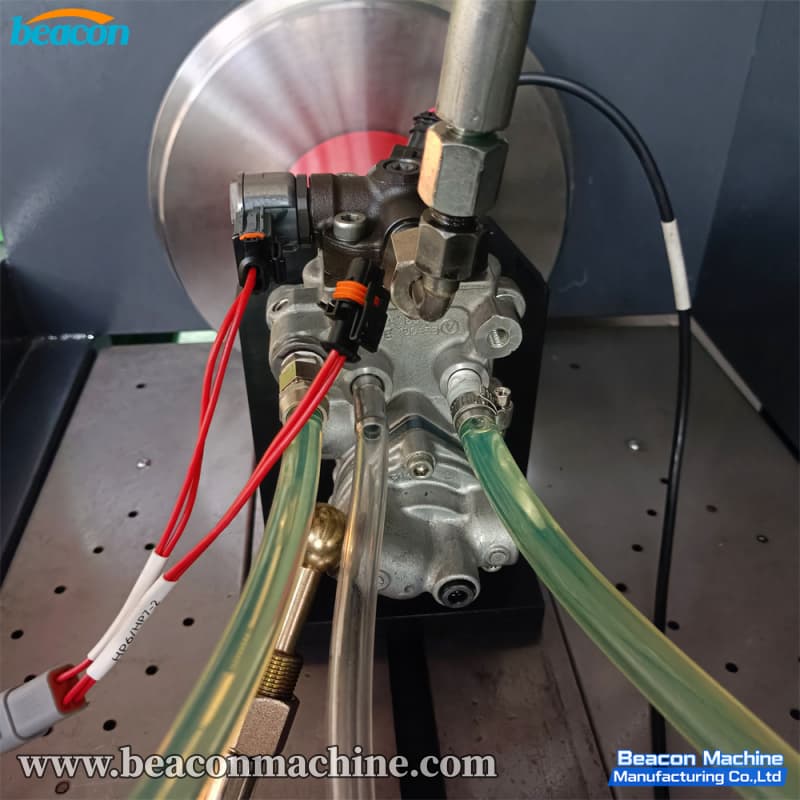
The complete configuration must be verified for the specific pump model. A standard test bench alone does not guarantee that every HP5 or HP6 pump can be mounted, driven and tested correctly.
The required setup includes:
A compatible Beacon Machine CR708 or CR1017 test bench.
A dedicated HP5 or HP6 mounting and drive fixture.
Suitable fuel supply, return and high-pressure connections.
The correct test program and applicable calibration data.
Verification of fixture compatibility before the pump is operated.
Why Is a Dedicated HP5/HP6 Fixture Important?
HP5 and HP6 pumps have different internal configurations and may have different mounting interfaces and drive requirements.
The dedicated fixture provides the correct mounting and mechanical connection for the particular pump. It also helps ensure that the test lines can be connected correctly and that the pump can be operated safely within the specified test conditions.
Before ordering, send Beacon Machine the complete DENSO pump number and a clear photo of the pump. This allows the required fixture and test configuration to be checked.
Need to test DENSO HP5 or HP6 pumps in your workshop? Contact Beacon Machine to confirm whether the CR708 or CR1017, together with the appropriate dedicated fixture and test data, meets your requirements.
8. Applications and Workshop Use Cases
Diesel Injection Pump Repair Workshops
Specialist workshops can use a suitable HP5/HP6 test setup to investigate pump faults, compare measured delivery with specifications and verify repairs.
Heavy-Duty Truck Service Centers
Truck service centers can diagnose high-pressure fuel delivery problems on vehicles equipped with compatible DENSO common rail systems.
Construction Equipment Repair Workshops
Workshops servicing diesel-powered off-highway machinery can use pump identification and controlled bench testing to support maintenance and repair.
Agricultural Machinery Service Centers
Agricultural diesel equipment may require reliable fuel delivery under variable loads. A suitable bench test can help assess the pump before it is returned to service.
Diesel Equipment Distributors
Distributors offering fuel system repair services can evaluate the demand for dedicated HP5/HP6 fixtures and compatible test bench configurations.
9. Frequently Asked Questions
Q1: What is a DENSO HP5 fuel pump?
DENSO HP5 is a family of high-pressure common rail fuel pumps. The family includes different configurations, such as HP5S and HP5D. The full part number is needed to identify the exact pump.
Q2: What is the difference between DENSO HP5 and HP6?
HP5 is used in passenger vehicles and selected smaller commercial vehicle applications. HP6 is designed for higher-capacity engines, typically around 6–8 litres, including commercial, off-highway and agricultural applications.
Q3: What are the main DENSO HP5 and HP6 part number references?
Useful family references include 294050-#### for HP5S, 299020-#### for HP5D, 299000-0020 as an HP5 example, 299090-#### for HP5E, and 299050-#### for HP6. Always verify the complete pump number before ordering parts.
Q4: Can a DENSO HP5 pump be tested on the CR708?
The CR708 can be considered when configured with the appropriate dedicated HP5 fixture and supported test data. Confirm the exact pump model and fixture compatibility with Beacon Machine before purchase.
Q5: Can the CR1017 test a DENSO HP6 pump?
The CR1017 can be considered for HP6 testing when the correct fixture, connections and test procedure are available and confirmed for the particular pump.
Q6: Is a dedicated fixture required for HP5 and HP6 testing?
Yes. The appropriate fixture is essential for correct mounting, drive alignment and connection of the pump to the test system. Confirm the fixture for the exact pump variant.
Q7: Can one HP5 fixture test every HP5 pump?
Not necessarily. HP5S, HP5D, HP5E and individual pump assemblies can differ. Check the complete part number and mechanical interface before selecting a fixture.
Q8: Can one fixture be used for both HP5 and HP6?
Do not assume so. The pump families have different configurations and may require different fixtures. Obtain confirmation from the test bench supplier.
Q9: How do I know whether the pump is faulty?
Combine vehicle diagnostic information with a controlled bench test. Compare the measured results against the correct pump specifications, and consider other causes such as injector leakage and low-pressure supply faults.
Q10: What information should I send to Beacon Machine?
Send the complete DENSO part number, OEM reference if available, engine model, vehicle or equipment model, and clear photos of the pump label and mounting interface.
Conclusion
DENSO HP5 and HP6 common rail fuel pumps require accurate identification and a test setup suited to the specific pump configuration.
For professional diesel repair workshops, the key requirements are a compatible test bench, the correct dedicated HP5/HP6 fixture and verified test procedures.
Beacon Machine CR708 and CR1017 test benches can be considered for this work when the appropriate fixture and test data are confirmed for the pump being serviced.
Contact Beacon Machine with your pump identification details to discuss a suitable testing configuration.
Technical References
DENSO – Common Rail Pump: https://www.denso-am.eu/products/diesel-components/common-rail-pump
DENSO – Fourth-Generation Common Rail Diesel Technology: https://www.denso-am.eu/news/fourth-generation-common-rail-diesel-technology
DENSO product overview – HP5 and HP6 family information: https://www.scribd.com/document/825041565/Denso-Product-Overview
Aftermarket reference – DENSO HP5 pump 299000-0020 and Kubota reference 1J508-50500: https://www.kaufmann-motorenteile.ch/wp-content/uploads/2022/11/Injection_Pump_28.7.25-GOLD.pdf
The DENSO references support the general pump design and application categories. The aftermarket references are provided for identification research and should not replace the original equipment manufacturer's parts catalog or pump-specific service information.
contact us
TEL: +86-13375386258
Whatsapp:+86-13375386258
Email: jasonzheng@beacon-machine.com
Address: High Tech Industry Zone of East Tai an city,Shandong Province,China