Language
  EN
EN RU
RU ES
ES DE
DE EL
EL IT
IT JA
JA KO
KO PT
PT ID
ID SR
SR UK
UK VI
VI TH
TH TR
TR MS
MS BE
BE AR
ARHow to Test and Repair a CAT 320D Fuel Injection Pump
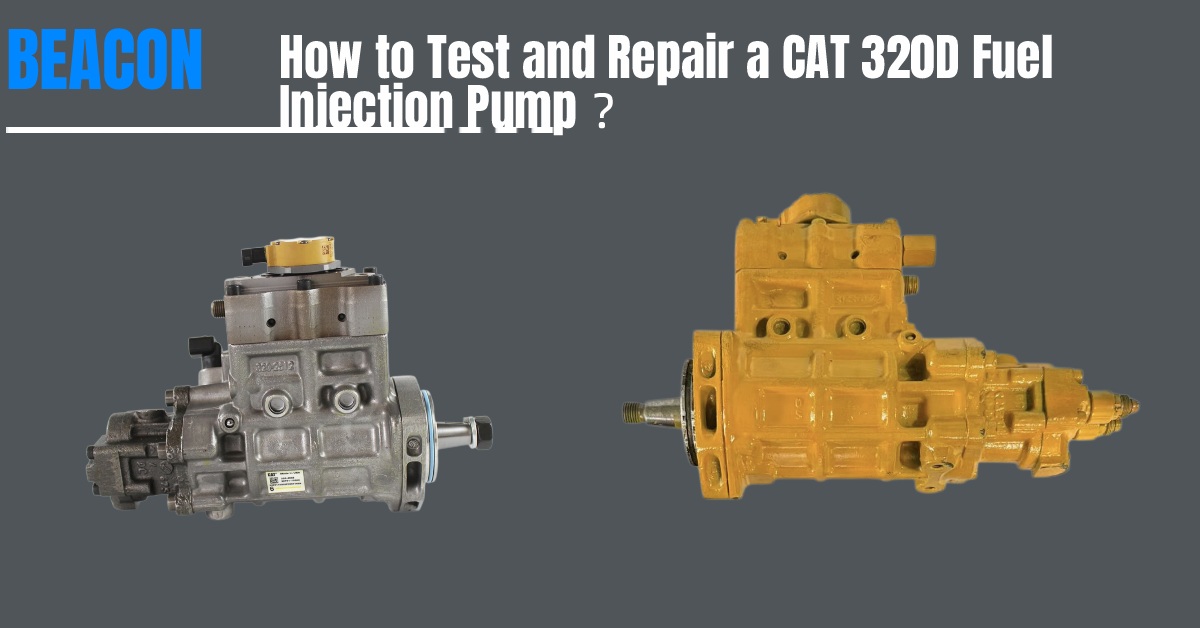
How to Test and Repair a CAT 320D Fuel Injection Pump: Part Numbers, Timing and Tools
The Caterpillar CAT 320D excavator is widely used in construction, earthmoving and infrastructure projects. Its C6.4 diesel engine relies on a high-pressure fuel injection system to deliver fuel under the conditions required for reliable engine operation.
When a CAT 320D fuel injection pump develops a fault, replacing the pump without proper diagnosis can increase repair costs and downtime. Professional diesel repair workshops should identify the exact pump assembly, inspect its condition, perform a controlled bench test and verify the timing-related requirements before returning it to service.
This guide covers CAT 320D fuel injection pump operation, important part numbers, compatible equipment applications, testing procedures, dedicated fixtures and specialized repair tools. It also explains how the Beacon Machine CR819S and CR1017-PLUS test benches can be configured for CAT 320D pump testing.
1. Introduction to the CAT 320D Fuel Injection Pump
The CAT 320D is available in different machine configurations and serial-number ranges. Many CAT 320D and 320D L excavators use the Caterpillar C6.4 diesel engine, although other configurations exist.
The C6.4 fuel injection pump supplies high-pressure fuel to the engine's fuel injection system. The pump must deliver fuel according to the requirements of the engine and its electronic control system.
Caterpillar parts information identifies fuel injection pump group 326-4635 for specified 320D excavators powered by the C6.4 engine. The corresponding remanufactured pump reference listed in the same parts information is 10R-7662.
These references are useful starting points for identifying a CAT 320D fuel injection pump, but the correct assembly must be verified against the machine serial number and installed pump identification.
How Does the CAT 320D Fuel Injection System Work?
The high-pressure common rail fuel system separates fuel pressurization from the individual injection events.
Its basic operating process consists of the following stages:
Fuel supply: Fuel passes from the tank through the supply and filtration system.
High-pressure generation: The injection pump pressurizes the fuel to the level required by the engine.
Rail supply: High-pressure fuel is delivered to the common rail.
Electronic injection control: The engine control system coordinates injector operation according to engine speed, load and operating conditions.
Pressure management: The system maintains the required fuel pressure and delivery to support engine performance.
The exact arrangement, pressure specifications, pump control strategy and timing-related requirements depend on the engine and pump configuration.
Why Is Pump Timing Important?
Correct timing is essential when a pump's mechanical drive position, synchronization or timing-related components must be set during installation or repair.
For CAT 320D pump servicing, the appropriate timing procedure must be followed for the exact pump and engine configuration. A pump that has been assembled or installed incorrectly may cause starting difficulties, abnormal engine operation or other fuel system problems.
A suitable pump test bench can help evaluate pump performance under controlled conditions. However, timing-related functions must be supported by the test bench's installed hardware, software and dedicated test configuration.
Important: CAT 320D TIMING is an optional test function that must be installed on the configured test bench for the applicable CAT 320D pump testing procedure. It should not be assumed to be included in every standard test bench configuration.
Technical References
Caterpillar official website: https://www.cat.com/
Caterpillar SIS and parts information: https://sis2.cat.com/
Caterpillar 320D parts information, including fuel injection pump group 326-4635: https://www.scribd.com/document/348764582/CAT-320D-BZP
Caterpillar SIS should be used to confirm the engine configuration, serial-number applicability, repair procedures and original parts information. The third-party-hosted parts document is a reference to Caterpillar service information, not a substitute for the official catalog.
2. Key Part Numbers and Interchange Numbers
Searching by pump part number is one of the most effective ways for repair shops and parts distributors to identify the correct CAT 320D fuel injection pump.
The following table consolidates important part numbers found in Caterpillar-related parts information and aftermarket cross-reference listings.
| Part number | Part description or reference | Application and verification notes |
|---|---|---|
| 326-4635 | Caterpillar fuel injection pump group | Listed for specified CAT 320D excavators equipped with the C6.4 engine |
| 10R-7662 | Remanufactured fuel pump reference | Listed as a remanufactured pump associated with 326-4635 |
| 320-2512 | Fuel injection pump reference | Appears in aftermarket cross-reference listings for selected C6.4 applications |
| 295-9126 | Related fuel pump reference | Listed in some aftermarket cross-reference data; verify the exact assembly |
| 317-8021 | Fuel injection pump reference | Appears in aftermarket listings for selected Caterpillar engine applications |
| 295-9125 | Related fuel pump reference | Reported in aftermarket cross-reference listings; verify serial-number applicability |
| 10R-7661 | Remanufactured pump reference | Associated with 317-8021 in some aftermarket listings |
| 32F61-10302 | Supplier or engineering reference | Appears in aftermarket cross-reference data associated with selected C6.4 pumps |
| 32F61-10301 | Supplier or engineering reference | Appears in aftermarket cross-reference data associated with 317-8021 |
Important Notes on Pump Interchangeability
The numbers in this table are not a declaration that all listed pumps are interchangeable.
Some numbers refer to complete pump assemblies, while others are remanufactured, supplier or engineering references. Their applicability can vary according to engine configuration, machine serial number and production changes.
Before ordering a replacement pump or selecting a CAT 320D test fixture, verify:
The complete pump part number and identification markings.
The machine serial number.
The engine model and serial number.
The original Caterpillar parts catalog.
The pump mounting interface and drive configuration.
The correct timing and test requirements.
For accurate parts identification, use Caterpillar SIS or an authorized Caterpillar parts provider.
3. Compatible Engines and Applications
The CAT 320D fuel injection pump is most commonly researched in connection with the C6.4 engine and associated Caterpillar construction equipment.
The following table provides a useful search-oriented application reference. It distinguishes applications reported in parts catalogs from related equipment that requires additional verification.
| Machine model | Engine or configuration | Fuel pump reference | Application notes |
|---|---|---|---|
| CAT 320D Excavator | C6.4 | 326-4635 / 10R-7662 | Listed in Caterpillar parts information for specified serial-number configurations |
| CAT 320D L Excavator | C6.4 | 326-4635 / 10R-7662 | Listed for selected 320D L configurations |
| CAT 320D GC | Configuration dependent | Verify by serial number | Do not assume every configuration uses the same pump |
| CAT 320D LRR | C6.4 in specified configurations | Verify by serial number | Check the original parts catalog |
| CAT 320D RR | Configuration dependent | Verify by serial number | Check the installed engine and pump |
| CAT 320D FM | C6.4 in specified configurations | Verify by serial number | Forestry machine applications require configuration-specific checking |
| CAT 321D LCR | C6.4 in specified configurations | 326-4635 appears in parts listings | Verify the machine serial number |
| CAT 323D L | C6.4 in specified configurations | 326-4635 appears in parts listings | Confirm the exact pump assembly |
| CAT 323D LN | Configuration dependent | Verify by serial number | Check the original parts catalog |
| CAT 323D SA | Configuration dependent | Verify by serial number | Check the original parts catalog |
Caterpillar parts information associates pump group 326-4635 with multiple C6.4-powered machine configurations, including specified 320D, 321D LCR and 323D applications.
However, the same model name can cover different production ranges and equipment configurations. Always verify the engine and pump using the machine serial number.
How to Identify the Correct CAT 320D Pump
If you are repairing a CAT 320D pump or sourcing a replacement, follow this process:
Record the machine serial number.
Identify the engine model and serial number.
Read the pump part number from the pump label or housing.
Cross-check the pump against the Caterpillar parts catalog.
Confirm the correct CAT 320D fixture and timing test configuration before bench testing.
This process helps prevent incorrect part ordering and unnecessary workshop downtime.
4. Common CAT 320D Fuel Injection Pump Problems
A suspected fuel injection pump fault should be diagnosed systematically. Similar symptoms may be caused by fuel supply restrictions, injector leakage, electrical faults, contaminated fuel or other engine problems.
Hard Starting or Failure to Start
If the fuel system cannot build the required pressure, the engine may crank for an extended period or fail to start.
Check the fuel supply, filter condition, air ingress, electrical controls and injector condition before concluding that the pump is faulty.
Low Fuel Rail Pressure
Low actual rail pressure compared with the commanded value may indicate a pump delivery problem, a supply restriction, excessive injector return flow or a pressure regulation fault.
The diagnosis should follow the engine manufacturer's procedure.
Reduced Engine Power
A pump that cannot meet the required fuel delivery under load may contribute to reduced engine performance. Other causes, including injector faults and engine air system problems, must also be considered.
Unstable Engine Operation
Fuel pressure fluctuations, injector problems, control faults or incorrect timing-related settings may contribute to unstable operation.
Fuel Leakage or Contamination
Inspect the pump housing, fittings, seals and surrounding fuel system for leaks. Metal contamination may indicate internal wear and can affect other fuel system components.
If contamination is present, inspect the wider system before returning the machine to service.
5. How to Test a CAT 320D Fuel Injection Pump
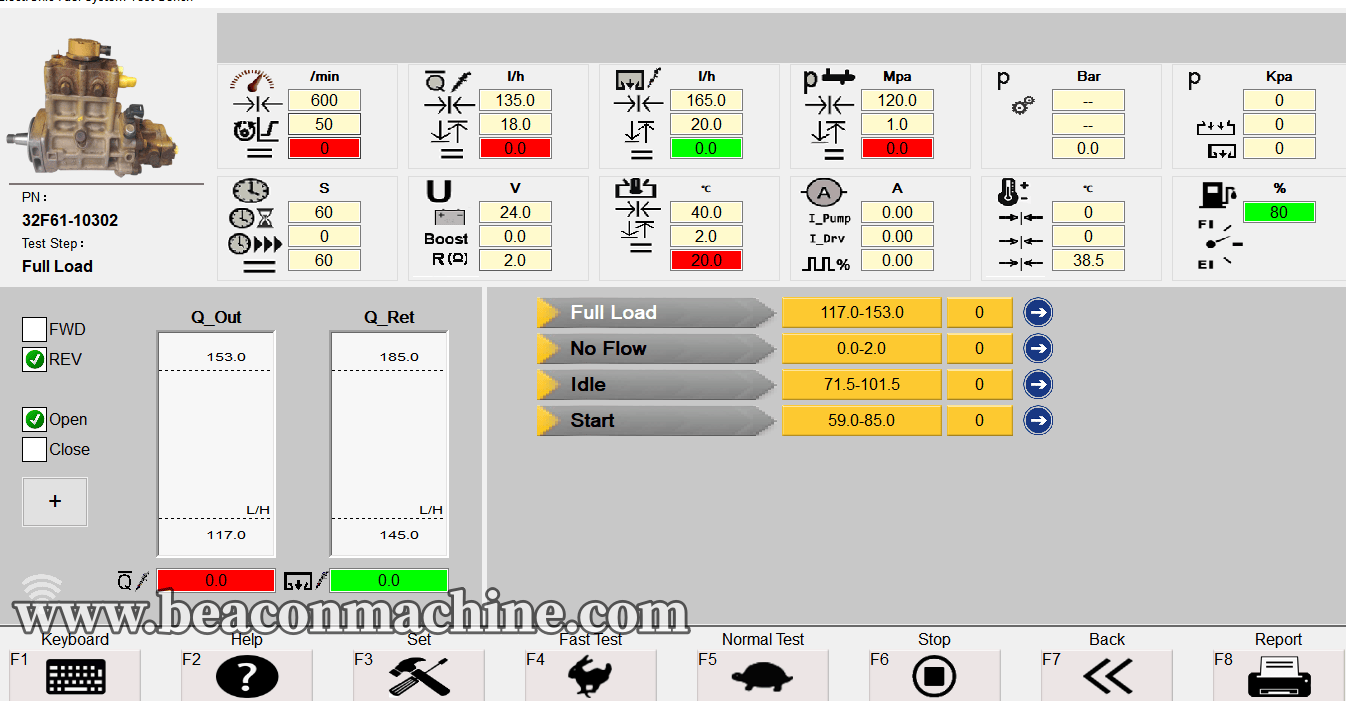
A reliable test requires the correct CAT 320D fixture, the applicable test bench configuration and the appropriate pump test data.
Step 1: Identify the Pump
Record the complete pump part number, engine model and machine serial number.
Confirm that the pump matches the intended CAT 320D testing configuration. Do not select a test program based solely on the machine model.
Step 2: Inspect the Pump Before Testing
Check the pump for external damage, corrosion, damaged fittings, worn drive interfaces and contamination.
If the pump has suffered an internal failure, determine whether it requires disassembly and cleaning before testing.
Step 3: Install the Dedicated CAT 320D Pump Fixture
Use a dedicated CAT 320D fixture designed for the specific pump configuration.
The fixture must provide secure mounting, correct drive alignment and the necessary fuel and control connections.
Beacon Machine offers two fixture configuration types for this application:
Type 1: Standard CAT 320D pump fixture
This fixture provides the required mounting and connection arrangement for compatible pump configurations that do not require the additional oil lubrication setup.
Type 2: CAT 320D fixture with an oil lubrication circuit
Some CAT 320D pump configurations require a dedicated oil lubrication arrangement during testing. For these pumps, the test setup must include the specified oil supply system, rather than relying on the standard fuel supply alone.
Confirm which fixture is appropriate for the exact pump before operating the test bench.
Step 4: Check Whether the Pump Requires Oil Lubrication
Before testing, establish the lubrication requirements of the pump.
If the pump configuration requires an external oil supply during bench testing, the test bench must be equipped with the appropriate system, including:
An oil supply motor.
A dedicated oil tank.
An oil supply pump.
The required oil hoses and connections.
The correct oil supply arrangement for the dedicated fixture.
The oil supply circuit must be installed and verified before the pump is operated.
Do not run an oil-lubricated pump without the required lubrication. Inadequate lubrication can cause excessive friction, overheating and internal component damage.
Step 5: Install the CAT 320D TIMING Test Function
The CAT 320D TIMING function is an optional configuration required for the applicable CAT 320D pump testing procedure.
Before testing, confirm that the test bench has the CAT 320D TIMING option installed and that the required fixture and test program are available.
A standard test bench without the necessary timing function should not be assumed to provide the complete CAT 320D testing capability.
Step 6: Connect the Fuel and Control Lines
Connect the low-pressure fuel supply, high-pressure outlet, return lines and any required control connections according to the pump and fixture documentation.
Use suitable pressure-rated fittings and follow the prescribed priming and air-removal procedure.
Step 7: Select the Correct Test Program
Choose the applicable CAT 320D pump program and operating conditions.
Use verified technical data for test speed, pressure, fuel delivery, control settings and acceptance limits. Do not substitute generic values from a different pump.
Step 8: Perform the Test
Operate the test bench according to its instructions while monitoring the parameters specified by the applicable procedure.
Depending on the supported test program, these may include fuel delivery, pressure response, stability, leakage and timing-related measurements.
Stop the test if abnormal vibration, noise, leakage or other unsafe conditions appear.
Step 9: Evaluate and Record the Results
Compare the measured results with the correct specifications for the identified pump.
If the pump fails, determine whether the cause is internal wear, contamination, incorrect assembly, a fixture problem or an unsuitable test configuration.
Record the pump identification, test conditions, measurements and final outcome.
Safety note: High-pressure diesel fuel can penetrate the skin and cause severe injury. Never search for high-pressure leaks with your hands. Follow the test bench manufacturer's safety procedures and release pressure safely before disconnecting any line.
6. Recommended Test Benches: CR819S and CR1017-PLUS
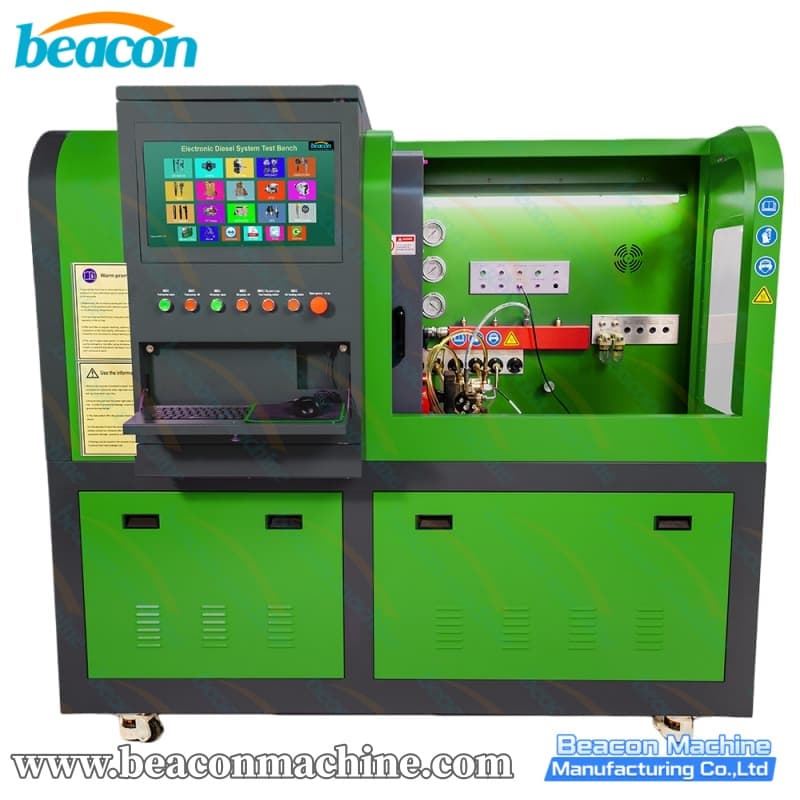
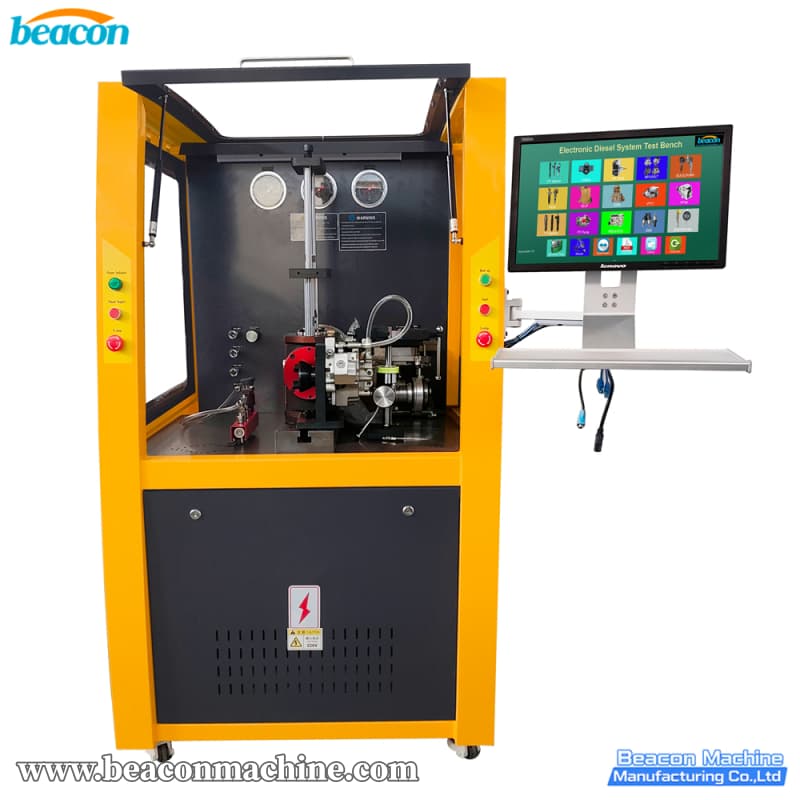
For diesel injection repair workshops that service CAT 320D fuel injection pumps, Beacon Machine recommends considering the CR819S or CR1017-PLUS configured with the dedicated CAT 320D pump fixture.
The CAT 320D TIMING option must also be installed for the applicable timing-related pump testing procedure.
The complete setup should be selected according to the pump's requirements.
Required Configuration
The CAT 320D testing setup may include:
Beacon Machine CR819S or CR1017-PLUS test bench.
Dedicated CAT 320D pump fixture.
CAT 320D TIMING optional function.
The appropriate fuel supply and high-pressure connections.
An oil lubrication system when required by the specific pump.
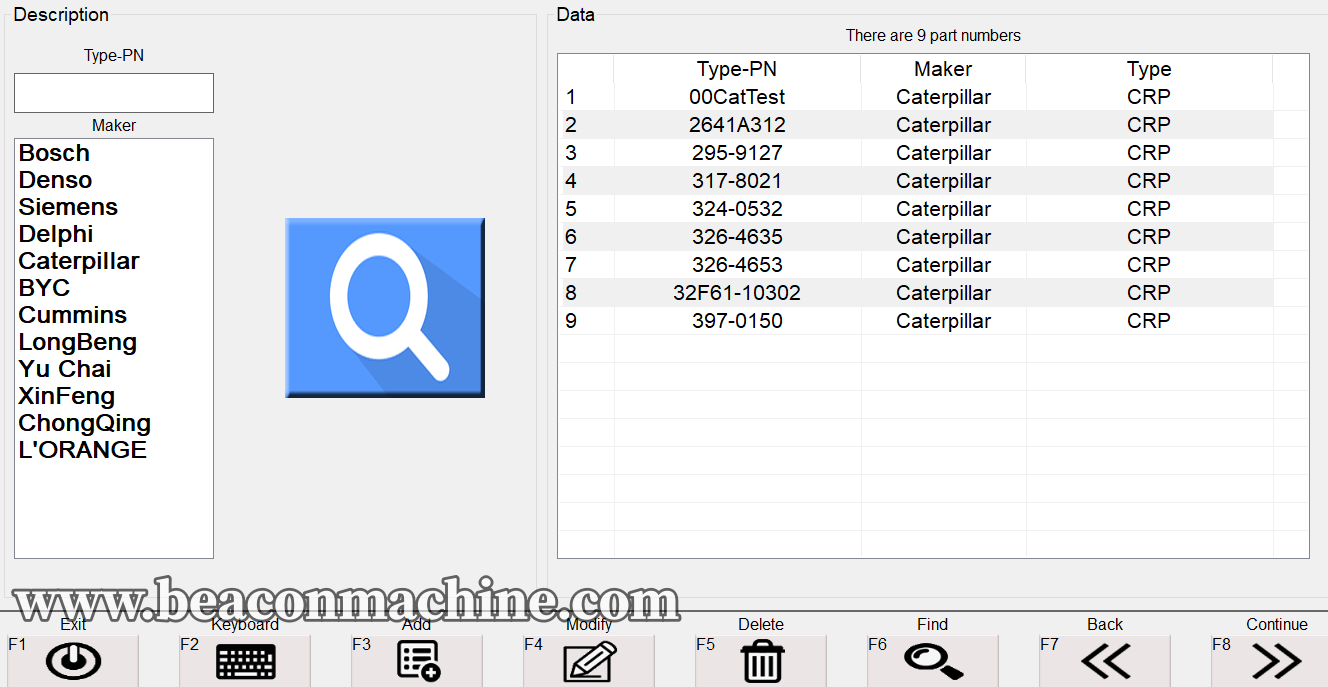
The correct test program and verified technical data.
Choosing Between the Two Fixture Types
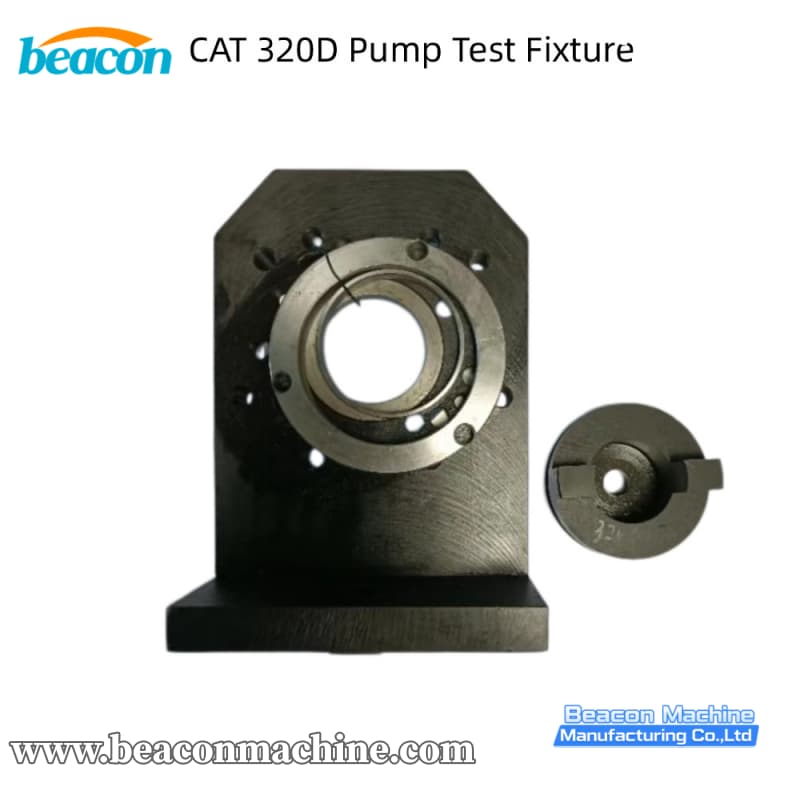
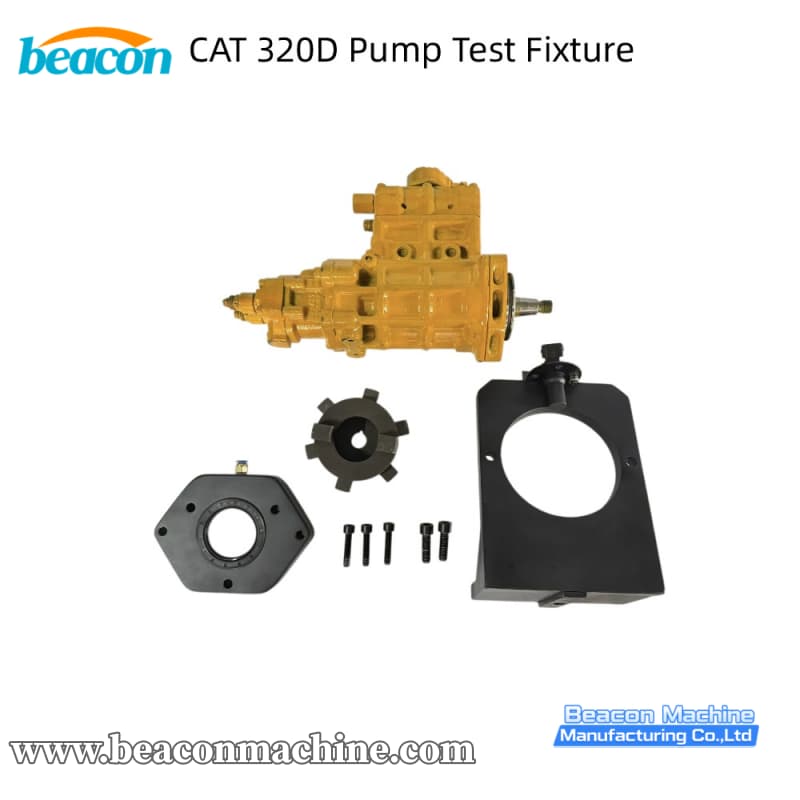
For compatible pumps that do not require the additional oil lubrication arrangement, the standard fixture may be suitable.
For pumps that require external oil lubrication during testing, select the fixture with the oil lubrication circuit and ensure that the test bench is equipped with the oil supply motor, oil tank, oil supply pump and required oil lines.
The fixture type must be confirmed before purchase.
Looking for a CAT 320D pump testing solution? Contact Beacon Machine with your pump part number and a clear photo of the pump. We can help confirm the appropriate fixture, timing option and lubrication configuration for your application.
7. CAT 320D Pump Repair Tools
Accurate pump testing is only one part of a professional repair process. Proper disassembly, measurement, component preparation and reassembly are also essential.
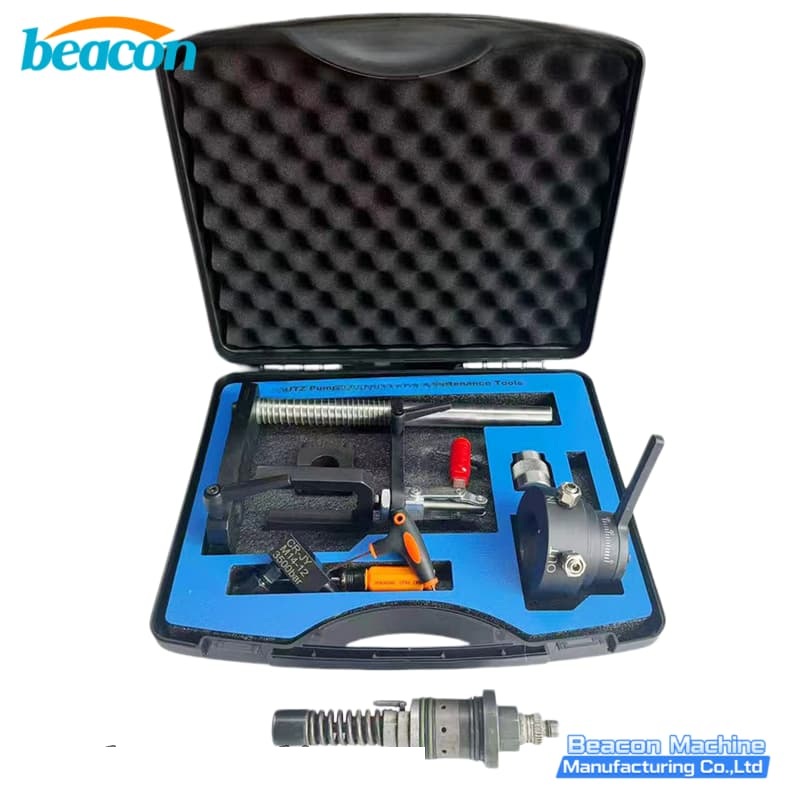
Beacon Machine offers two specialized tool sets for CAT 320D pump repair.
G4-57 CAT 320D Pump Disassembly, Stroke Measurement and Grinding Tool Kit
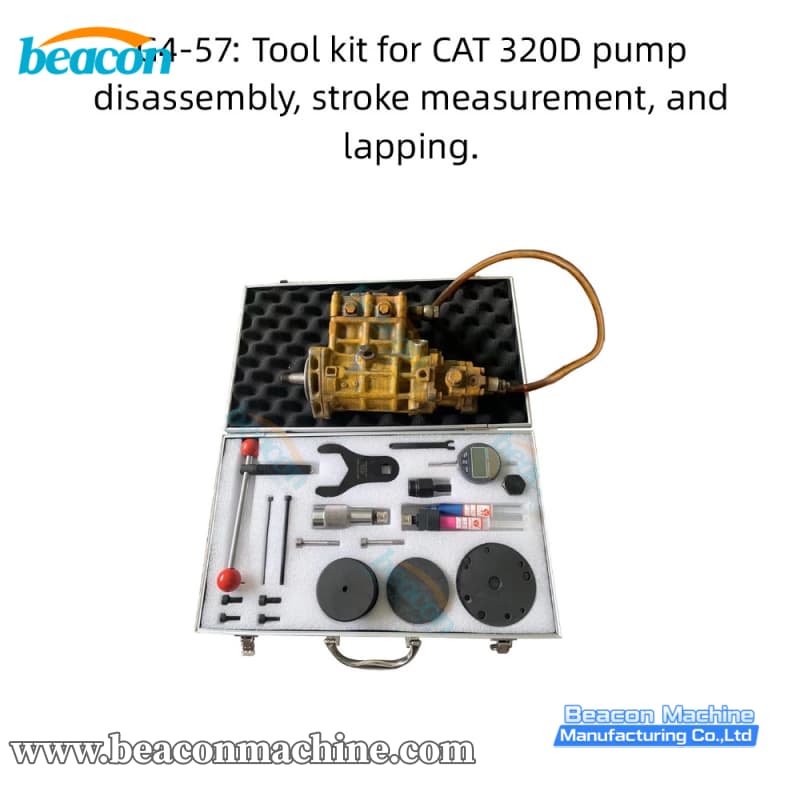
The G4-57 tool kit is designed to support the disassembly and repair workflow for compatible CAT 320D fuel injection pumps.
Its intended applications include:
Pump disassembly and component removal.
Pump stroke measurement.
Support for relevant grinding and repair operations.
More consistent handling of components during workshop servicing.
Correct measurement is important when evaluating pump components and determining whether parts meet the applicable repair specifications.
The G4-57 should be used with the correct technical procedures and measurement specifications for the pump being serviced.
G4-58 CAT 320D Pump Cylinder Locking Tool
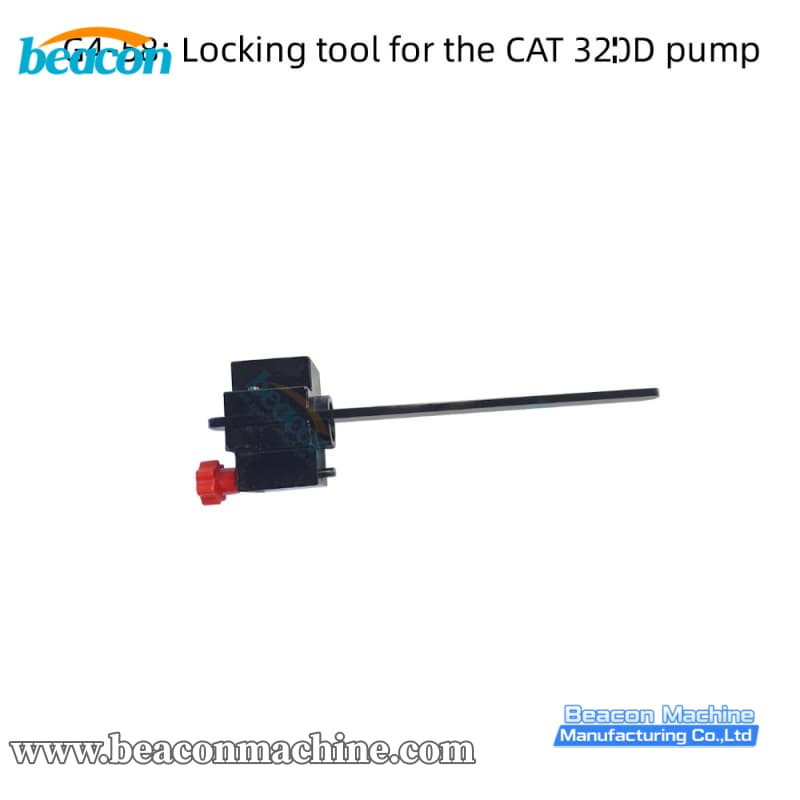
The G4-58 is a specialized locking tool for compatible CAT 320D pump repair operations.
A suitable locking tool helps secure the relevant component in the required position during disassembly or assembly, where the specified repair procedure calls for it.
Correct positioning and secure locking can help reduce the risk of unwanted movement during servicing.
Always confirm that the tool matches the pump version and use the appropriate workshop procedure.
Building a Complete CAT 320D Pump Repair Workflow
For a professional diesel repair workshop, the overall process can include:
Identify the pump and confirm the original part number.
Diagnose the fault and inspect the pump.
Disassemble the pump using the appropriate tools.
Measure relevant components and inspect wear.
Carry out the necessary repair operations.
Reassemble the pump according to the specified procedure.
Install the pump on the dedicated CAT 320D fixture.
Verify the required oil lubrication arrangement and CAT 320D TIMING function.
Perform the bench test and record the results.
The G4-57 and G4-58 tool sets complement a suitable test bench by supporting the mechanical repair process before final testing.
8. Applications and Workshop Use Cases
Diesel Injection Pump Repair Workshops
Specialist workshops can use a dedicated CAT 320D fixture and the correct timing function to test compatible pumps after diagnosis or repair.
Construction Equipment Service Centers
Excavator maintenance centers can investigate fuel delivery problems and evaluate repaired pumps before reinstalling them in the machine.
Heavy Equipment Rebuilding Facilities
Rebuilding businesses can combine specialized repair tools, pump measurement and controlled testing to improve the consistency of their repair process.
Diesel Parts Distributors
Parts distributors can use the pump identification table to assist customers searching for 326-4635, 10R-7662 and other related references, while confirming exact compatibility before supplying a replacement.
Independent CAT Engine Repair Specialists
Independent repair businesses can build a more complete CAT 320D fuel system service offering by combining pump testing equipment, dedicated fixtures, timing functionality and specialized repair tools.
9. Frequently Asked Questions (FAQ)
Q1: Which engine is used in the CAT 320D excavator?
Many CAT 320D and 320D L excavators use the Caterpillar C6.4 diesel engine. However, the installed engine must be confirmed for the specific machine and serial-number range.
Q2: What is the CAT 320D fuel injection pump part number?
Part number 326-4635 is listed for specified CAT 320D C6.4 configurations. The associated remanufactured pump reference is 10R-7662. Verify the exact assembly using Caterpillar parts information.
Q3: Is 320-2512 interchangeable with 326-4635?
Some aftermarket cross-reference listings associate 320-2512 with selected C6.4 fuel pump applications. Do not assume direct interchangeability without confirming the original pump number and machine serial number.
Q4: Can the CR819S test a CAT 320D pump?
The CR819S can be considered when configured with the dedicated CAT 320D pump fixture and the required CAT 320D TIMING function. Confirm the exact pump and test configuration before purchase.
Q5: Can the CR1017-PLUS test a CAT 320D pump?
The CR1017-PLUS can be considered for CAT 320D pump testing with the compatible dedicated fixture and required CAT 320D TIMING option installed.
Q6: Is the CAT 320D TIMING function necessary?
For the applicable CAT 320D pump testing procedure, the CAT 320D TIMING optional function must be installed. Confirm the required function for the specific pump and test procedure.
Q7: Does every CAT 320D pump require an oil lubrication circuit?
The lubrication requirement depends on the specific pump configuration. If the pump requires external oil lubrication during testing, use the appropriate fixture and ensure that the test bench has the required oil supply equipment.
Q8: What is the difference between the two CAT 320D pump fixtures?
The standard fixture provides the appropriate mounting and connections for compatible configurations. The second fixture incorporates an oil lubrication circuit for pumps that require external oil lubrication during testing.
Q9: What are the G4-57 and G4-58 tools used for?
The G4-57 supports pump disassembly, stroke measurement and relevant grinding operations. The G4-58 is a specialized locking tool for compatible CAT 320D pump repair procedures.
Q10: Can I test the pump without the dedicated fixture?
A dedicated fixture is required for the specified CAT 320D test configuration. The correct fixture helps provide secure mounting, appropriate drive alignment and the necessary connections.
Q11: What information should I provide when ordering a test bench or fixture?
Provide the complete pump part number, a clear pump photo, the machine serial number and engine information. Also specify whether the pump requires the oil lubrication fixture and CAT 320D TIMING function.
Q12: Where can I verify the original CAT 320D pump part number?
Use Caterpillar SIS or consult an authorized Caterpillar parts provider. Confirm the pump against the machine serial number and engine configuration before ordering replacement parts.
Conclusion
Testing and repairing a CAT 320D fuel injection pump requires accurate identification, the correct dedicated fixture, appropriate test data and the required timing-related configuration.
For compatible applications, the Beacon Machine CR819S and CR1017-PLUS can be considered with a dedicated CAT 320D fixture and the CAT 320D TIMING optional function.
Where the pump requires external oil lubrication during testing, the test bench must also be equipped with the appropriate oil supply motor, oil tank, oil supply pump and oil lines, together with the corresponding lubrication fixture.
For the repair process, the G4-57 disassembly, stroke measurement and grinding tool kit and the G4-58 locking tool provide additional support for compatible CAT 320D pump servicing.
Contact Beacon Machine with your pump identification details to confirm the correct testing and repair configuration for your workshop.
Technical References
Caterpillar official website: https://www.cat.com/
Caterpillar SIS: https://sis2.cat.com/
Caterpillar 320D C6.4 parts information, including pump group 326-4635 and remanufactured reference 10R-7662: https://www.scribd.com/document/348764582/CAT-320D-BZP
Caterpillar 320D and 320D L C6.4 parts information: https://es.scribd.com/document/511633041/bomba-de-combustibleC6-4
Aftermarket Caterpillar fuel pump cross-reference guide: https://fuelpartspro.com/de/blogs/tips-news-events/caterpillar-fuel-system-part-number-cross-reference-guide-c6-4-c7-c7-1-c9-oem-vs-reman-vs-engineering-numbers
The Caterpillar references should be used to confirm original parts and repair information. Aftermarket cross-reference numbers are provided for research and must be verified against the specific engine and machine configuration.
contact us
TEL: +86-13375386258
Whatsapp:+86-13375386258
Email: jasonzheng@beacon-machine.com
Address: High Tech Industry Zone of East Tai an city,Shandong Province,China