Language
  EN
EN RU
RU ES
ES DE
DE EL
EL IT
IT JA
JA KO
KO PT
PT ID
ID SR
SR UK
UK VI
VI TH
TH TR
TR MS
MS BE
BE AR
ARHow to Test a Cummins CCR1600 Common Rail Diesel Fuel Pump
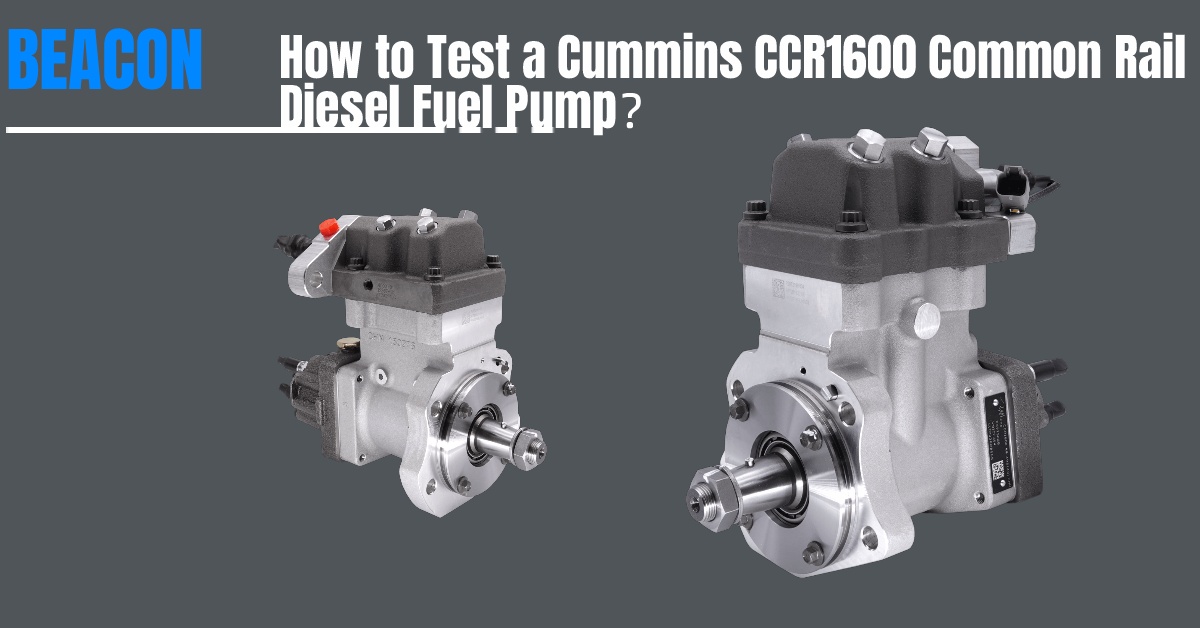
How to Test a Cummins CCR1600 Common Rail Diesel Fuel Pump: Part Numbers, Applications and Test Bench Setup
The Cummins CCR1600 common rail diesel fuel pump is a high-pressure fuel system component used in selected Cummins diesel engine applications and related industrial machinery. Correct testing is essential for diesel repair workshops that diagnose low fuel pressure, hard starting, unstable engine operation and other fuel system problems.
However, testing a CCR1600 pump requires more than a conventional common rail test bench. The test bench must provide suitable engine-oil lubrication, and a dedicated CCR1600 test fixture with an oil lubrication circuit is required. Without the correct setup, internal components may suffer inadequate lubrication and premature wear.
In this guide, we explain how the CCR1600 fuel pump works, identify important part numbers and potential engine applications, and outline the correct test bench configuration for professional diesel injection pump repair.
1. What Is the Cummins CCR1600 Common Rail Fuel Pump?
The Cummins CCR1600 is associated with the Cummins Common Rail (CCR) fuel injection system. Unlike a conventional mechanical injection pump that directly meters and distributes fuel to individual cylinders, a common rail system supplies high-pressure fuel to a shared rail, from which electronically controlled injectors deliver fuel to the engine cylinders.
Cummins describes its common rail technology as a system that separates high-pressure fuel generation from the individual injection events. This architecture enables more precise fuel delivery and supports improved combustion performance and fuel economy.
Official technical reference:
Cummins – Fuel System Components: https://www.cummins.com/en-na/components/fuel-systems
Cummins – Common Rail Systems: https://www.cummins.com/en-in/components/electronics-fuel-systems/fuel-systems/common-rail-systems
How Does the CCR1600 Fuel Pump Work?
The basic operating process of a common rail fuel injection system is as follows:
Fuel supply: Diesel fuel is delivered from the fuel tank through the low-pressure supply circuit and filtration system.
High-pressure generation: The fuel pump uses its internal pumping mechanism to pressurize the fuel.
Rail pressure supply: High-pressure fuel is delivered to the common rail, where pressure is maintained within the operating requirements of the engine.
Electronic injection control: The engine control module coordinates injector operation according to engine speed, load and other operating parameters.
Pressure and fuel quantity management: The fuel system regulates pressure and delivery to meet the engine's operating requirements.
The exact pump configuration, lubrication method and control arrangements must be confirmed for the particular CCR1600 assembly being serviced.
Why Is Lubrication Important During Bench Testing?
A critical consideration when testing the CCR1600 is its lubrication requirement.
Cummins documentation describes common rail pump configurations that use engine-oil lubrication, while other fuel system designs may use fuel lubrication. These designs are not interchangeable simply because they belong to the same general fuel system family.
For a CCR1600 assembly that requires engine-oil lubrication, the test bench must reproduce the required lubrication arrangement. The dedicated fixture must include the appropriate oil supply connections and lubrication passages.
Without sufficient lubrication, internal moving components may experience excessive friction, overheating and premature wear. A pump can therefore be damaged during testing even when the test bench can mechanically drive it.
Important: Confirm the specific pump's lubrication specification before connecting it to a test bench. Never assume that diesel fuel alone is an adequate lubricant for an oil-lubricated pump.
2. Key Part Numbers and Interchange Numbers
When searching for a Cummins CCR1600 common rail fuel pump, repair shops may encounter several assembly numbers and replacement references.
The following table consolidates part numbers associated with CCR1600 pump listings and related aftermarket references. These numbers are useful for identification and online searches, but they should not be treated as a universally interchangeable set.
| Part number or reference | Identification and search relevance |
|---|---|
| CCR1600 | Common Rail pump designation used in product listings |
| 3973228 | Fuel pump assembly reference associated with CCR1600 listings |
| 4921431 | Fuel pump assembly reference associated with CCR1600 listings |
| 4954200 | Additional assembly reference listed with CCR1600 |
| 4088604 | Compatible/replacement reference reported in some aftermarket listings |
| 5311171 | Additional replacement reference reported in aftermarket listings |
| 4902731 | Additional reference associated with CCR1600 pump listings |
| 2872191 | Related reference appearing in aftermarket cross-reference listings |
| 2872930 | Related reference appearing in aftermarket cross-reference listings |
| 3975927 | Related reference appearing in aftermarket cross-reference listings |
| 5264248 | Related reference appearing in aftermarket cross-reference listings |
These references are compiled from aftermarket fuel pump listings, including listings for 3973228, 4921431 and 4954200. The inclusion of a number in this table does not independently establish direct interchangeability for every engine configuration.
Before ordering a replacement pump or selecting a test fixture, verify:
The complete part number stamped on the pump nameplate or housing.
The Cummins engine model and Engine Serial Number (ESN).
The original equipment manufacturer's parts catalog.
Pump mounting dimensions, drive configuration and connection positions.
The specified lubrication method and test requirements.
For authoritative parts verification, consult Cummins QuickServe Online: https://quickserve.cummins.com/
Cummins provides engine-specific parts and service information through its official technical information system.
3. Compatible Engines and Applications
CCR1600-related aftermarket listings associate these pump references with several Cummins engine families and selected Komatsu applications.
The table below is intended as an identification and SEO reference. Actual compatibility must be confirmed against the engine serial number and original pump part number.
| Engine or equipment reference | Common search terms | Application notes |
|---|---|---|
| Cummins ISLe | ISLe CCR1600 fuel pump; ISLe 3973228 | Listed in CCR1600-related aftermarket applications |
| Cummins QSL8.9 | QSL8.9 common rail pump; QSL8.9 4921431 | Listed as a potential application for related pump assemblies |
| Cummins QSL9 | QSL9 CCR1600 pump; QSL9 3973228 | Appears in related aftermarket fuel pump listings; verify exact engine configuration |
| Cummins ISL8.9 | ISL8.9 high-pressure fuel pump | Related engine family appearing in CCR1600 replacement listings |
| Cummins ISC8.3 | ISC8.3 common rail fuel pump | Appears in some listings for related 3973228 assemblies; confirm the exact system |
| Cummins QSC8.3 | QSC8.3 fuel injection pump | Appears in some aftermarket listings for 3973228; confirm pump identity before ordering |
| Cummins 6CT | Cummins 6CT CCR1600 pump; 6CT 3973228 | Listed by aftermarket suppliers; verify the engine and fuel system version |
| Komatsu SAA6D114E | SAA6D114E fuel pump; 4921431 | Listed as a related equipment application; check the machine serial number |
| Komatsu PC300-8 | PC300-8 Cummins fuel pump; 3973228 | Appears in selected aftermarket listings; verify the installed engine and pump |
| Komatsu PC350-8 | PC350-8 common rail pump; 3973228 | Appears in selected aftermarket listings; verify the installed engine and pump |
Important Application Note
Do not assume that every Cummins QSL, ISL, ISC or 6CT engine uses the same pump. Engine families can include different fuel systems, production periods and equipment-specific configurations.
Likewise, the Komatsu PC300-8 and PC350-8 model designations alone are not sufficient to confirm pump compatibility. Machine configuration and engine serial numbers must be checked.
For repair workshops, the most reliable identification process is to match the pump nameplate, engine ESN and original parts catalog before starting a repair or bench test.
4. Common Symptoms of a Faulty CCR1600 Fuel Pump
A suspected high-pressure fuel pump fault may produce several symptoms. These symptoms are not proof of pump failure because injectors, fuel filters, low-pressure supply components, electrical controls and other system components can produce similar problems.
Common symptoms include:
Hard starting or failure to start
The engine may struggle to start if the fuel system cannot build the required rail pressure. Check the low-pressure supply, air ingress, injector leakage and pressure control system before condemning the pump.
Low common rail pressure
If measured rail pressure does not reach the specified target, inspect the pump's delivery capability and the other components affecting rail pressure.
Unstable engine operation
Unstable idle, hesitation or reduced engine performance may be associated with fuel delivery problems, but electronic control and injector faults must also be considered.
Power loss under load
A restricted supply, inadequate high-pressure delivery or a pressure regulation problem may limit engine output.
Metallic contamination in the fuel system
Metal particles can indicate internal wear or a more extensive fuel system failure. Contamination should be investigated carefully because it may affect the rail, injectors and other components.
Always follow the engine manufacturer's diagnostic procedures before deciding whether the pump requires repair or replacement.
5. How to Test a Cummins CCR1600 Fuel Pump
A professional bench test should begin with identification and preparation rather than immediately driving the pump at high speed.
Step 1: Identify the Pump
Record the full pump part number and any available identification codes. Confirm the associated engine family, drive configuration and lubrication specification.
Do not select a fixture based only on the general CCR1600 designation if the actual pump assembly has not been verified.
Step 2: Inspect the Pump Before Testing
Check for external damage, loose fittings, damaged threads, corrosion, leakage and signs of contamination.
Inspect the drive interface and mounting surfaces. If the pump has experienced a major internal failure, determine whether it requires disassembly and cleaning before testing.
Step 3: Install the Dedicated CCR1600 Test Fixture
Use a fixture designed for the specific pump configuration. The fixture must provide secure mounting, correct drive alignment and appropriate connections for the test system.
A general-purpose mounting adapter may not provide the correct connections or lubrication arrangement.
Step 4: Connect the Engine-Oil Lubrication Circuit
For the applicable oil-lubricated CCR1600 configuration, connect the dedicated fixture's oil supply circuit according to the pump's technical requirements.
Before operating the test bench, verify that:
The correct lubricant is being used.
The oil supply and return connections are correctly installed.
Lubrication passages are clear.
The specified oil supply conditions are met.
The pump will receive lubrication before and throughout the test.
Never run an oil-lubricated pump dry, even for a brief test.
Step 5: Connect the Fuel Supply and Test Lines
Connect the low-pressure supply, high-pressure outlet and any required control or return connections according to the fixture and pump documentation.
Use the specified seals, fittings and rated high-pressure components. Remove trapped air using the prescribed procedure before evaluating pump performance.
Step 6: Configure the Test Parameters
Select the appropriate test procedure and operating conditions for the identified pump.
Speed, pressure, delivery, control signals and acceptance limits must come from the applicable technical data. Do not substitute generic values from another Cummins pump.
If verified CCR1600 test data are unavailable, obtain the correct service information before making a pass-or-fail decision.
Step 7: Evaluate Pump Performance
Monitor the relevant parameters available on the test bench, which may include:
Fuel delivery and delivery stability.
Pressure generation and response.
Leakage or return flow, where specified.
Mechanical noise, vibration and abnormal heating.
Lubrication supply and any visible leakage.
Compare recorded results with the manufacturer's specified limits. If the pump fails, investigate whether the cause is internal wear, contamination, incorrect setup or a fault in the test fixture.
Step 8: Complete the Test and Record the Results
Stop the test according to the correct shutdown procedure. Allow pressure to be safely released before disconnecting any lines.
Record the pump identification, test conditions, measured results, repair actions and final test outcome. A repeatable test report helps workshops establish a reliable repair process.
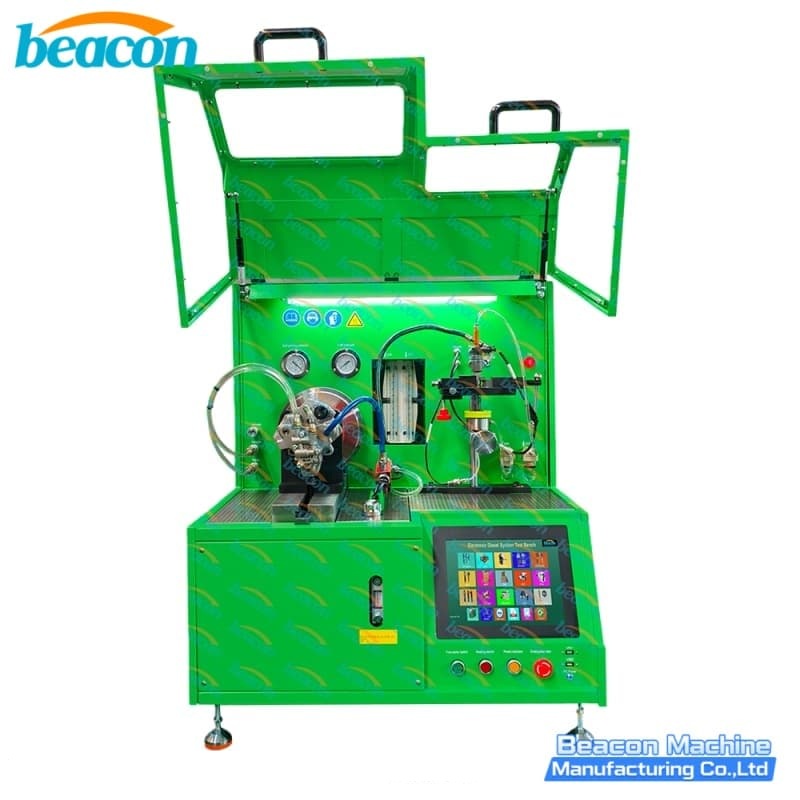
6. Recommended Test Bench: Beacon Machine CR909
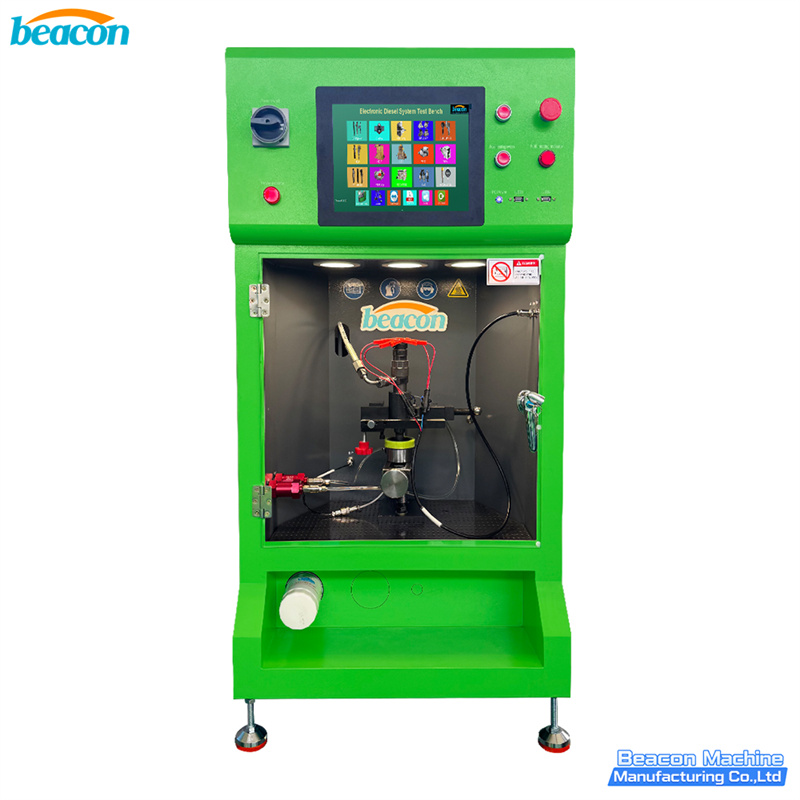
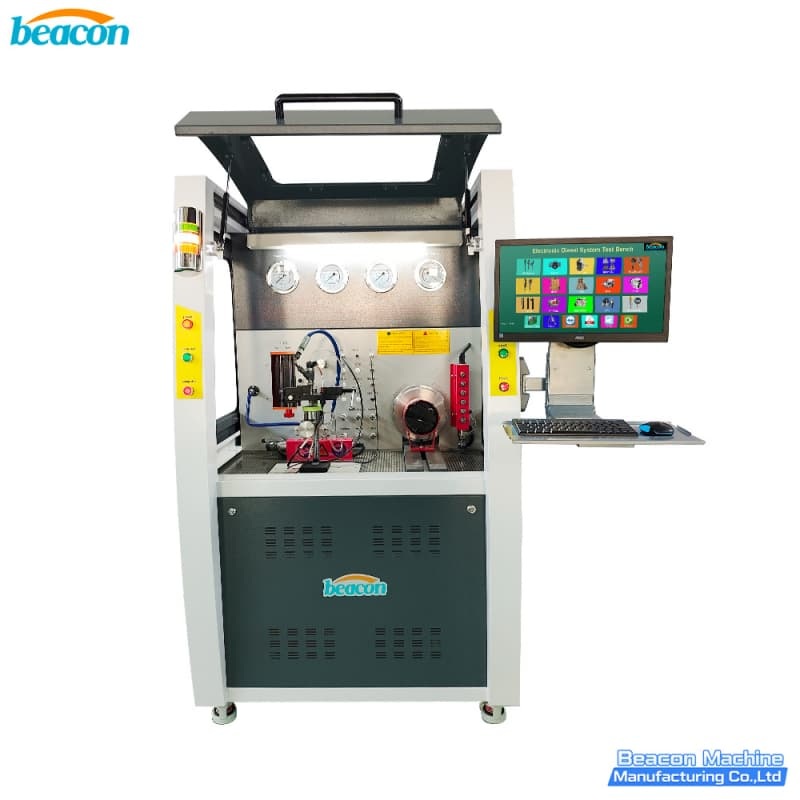
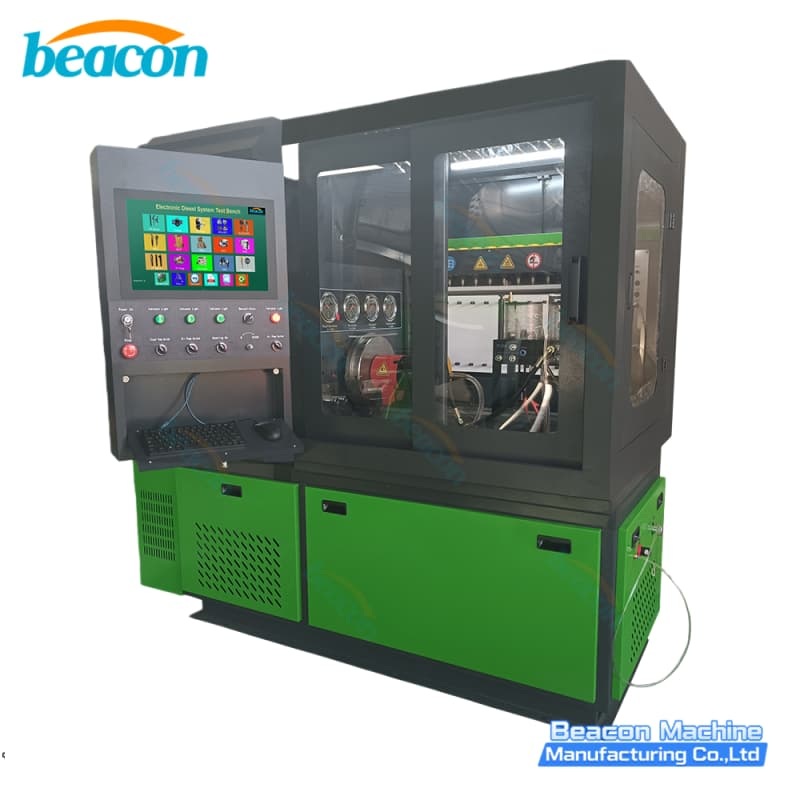
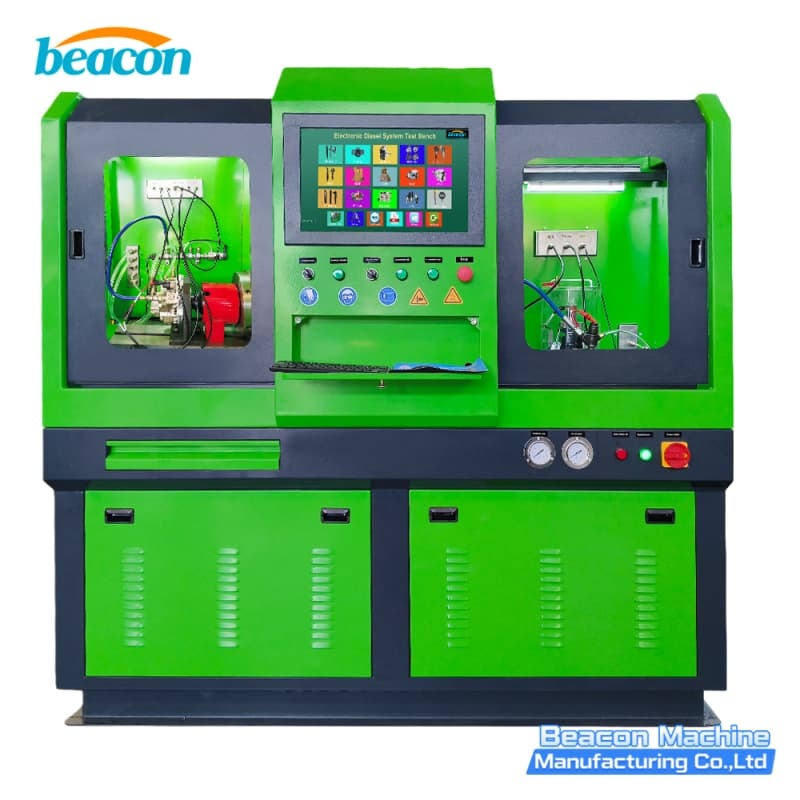
For diesel injection repair workshops that need to diagnose and service the Cummins CCR1600 common rail fuel pump, Beacon Machine recommends the CR909 common rail test bench, configured with a dedicated CCR1600 test fixture.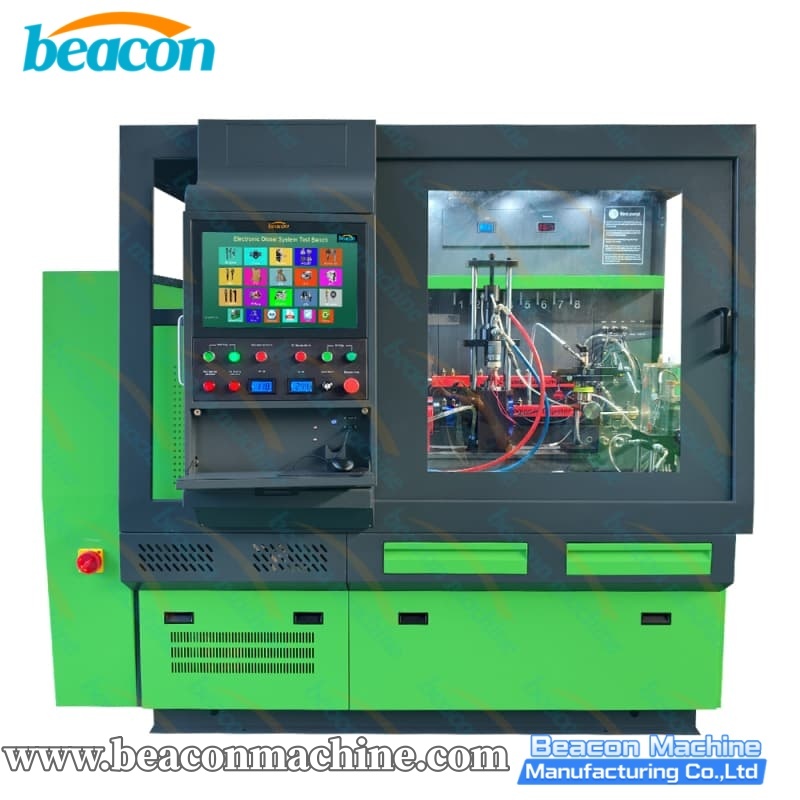
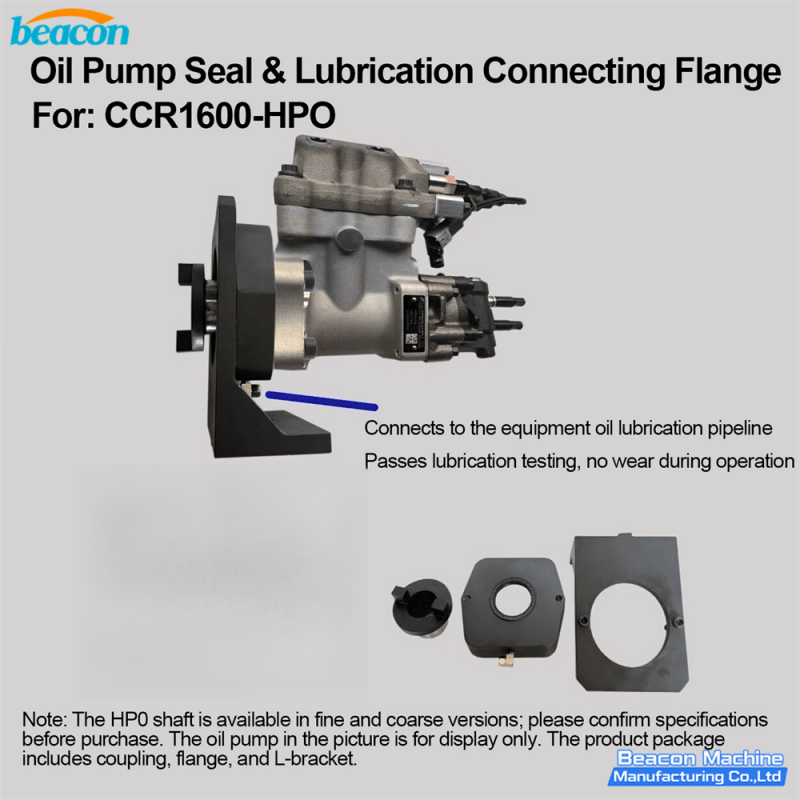
The key consideration is not just the test bench itself. The complete setup must be suitable for the specific pump, including the required engine-oil lubrication circuit.
The recommended configuration consists of:
A Beacon Machine CR909 test bench.
A dedicated CCR1600 pump mounting and drive fixture.
An engine-oil lubrication circuit integrated into the fixture.
Suitable fuel connections and high-pressure test lines.
Verified test procedures and applicable pump acceptance data.
The CR909 should not be represented as a plug-and-play CCR1600 solution without confirming the required fixture and lubrication configuration.
Before ordering, provide Beacon Machine with the pump nameplate photo, part number and relevant engine information. This allows the correct fixture and testing arrangement to be confirmed for your workshop.
Need to test the Cummins CCR1600 pump in your workshop? Contact Beacon Machine to discuss the CR909 test bench and a dedicated CCR1600 fixture with an oil lubrication circuit.
7. Applications and Workshop Use Cases
Diesel Injection Pump Repair Workshops
Workshops specializing in common rail fuel systems can use a correctly configured test bench to evaluate suspected pump faults, document performance and verify repairs.
Heavy-Duty Truck Service Centers
Truck service centers working on compatible Cummins-powered vehicles can investigate high-pressure fuel delivery problems after completing the engine manufacturer's initial diagnostic checks.
Construction Equipment Repair Facilities
Construction equipment workshops servicing applicable Komatsu machines can use pump identification and bench testing to support fuel system diagnosis and component repair.
Diesel Fuel Injection Specialists
Specialist repair businesses can use repeatable test procedures and recorded measurements to improve diagnostic consistency and reduce unnecessary component replacement.
Diesel Equipment Distributors
Distributors providing pump repair services can evaluate whether a dedicated CCR1600 fixture is a suitable addition to their existing common rail testing equipment.
8. Frequently Asked Questions (FAQ)
Q1: What is the Cummins CCR1600 fuel pump?
The CCR1600 is a designation associated with Cummins common rail high-pressure fuel pump assemblies. The exact configuration and application should be confirmed from the pump's identification details.
Q2: Which part numbers are associated with the CCR1600 pump?
References found in aftermarket listings include 3973228, 4921431 and 4954200, along with other reported replacement references. Confirm direct interchangeability using the engine ESN and the original parts catalog.
Q3: Which engines use the CCR1600 fuel pump?
Related listings mention Cummins ISLe, QSL8.9, QSL9, ISL8.9, ISC8.3, QSC8.3 and selected 6CT applications, as well as Komatsu SAA6D114E equipment. Not every engine in these families uses the same pump.
Q4: Can the CCR1600 pump be tested on a common rail test bench?
A suitable test bench can be used when the complete configuration supports the specific pump. For the applicable oil-lubricated CCR1600 assembly, a dedicated fixture and appropriate oil lubrication circuit are essential.
Q5: Why does the CCR1600 need an oil lubrication circuit during testing?
Where the pump design requires engine-oil lubrication, the oil circuit protects internal moving components by providing the required lubrication during operation. Running the pump without the specified lubrication can cause premature wear or damage.
Q6: Can the Beacon Machine CR909 test the CCR1600 pump?
Beacon Machine recommends the CR909 with a dedicated CCR1600 test fixture. Confirm fixture availability, mounting compatibility, lubrication connections and test data before purchase.
Q7: Is the dedicated CCR1600 fixture included with the CR909?
The fixture configuration should be confirmed when ordering. Do not assume that a standard test bench includes a CCR1600-specific adapter or the required oil lubrication circuit.
Q8: What information should I provide to select the correct fixture?
Provide a clear pump nameplate photo, the complete pump part number, the engine model, the engine serial number where available, and photos of the mounting interface and connections.
Q9: Can I use the same fixture for every Cummins common rail pump?
No. Pump mounting, drive interfaces, lubrication requirements and connections can differ. Confirm compatibility for each pump configuration.
Q10: Where can I verify the original Cummins pump part number?
Use Cummins QuickServe Online or contact an authorized Cummins service provider. Match the engine serial number and the installed pump identification before purchasing replacement components.
Conclusion
Testing a Cummins CCR1600 common rail fuel pump correctly requires accurate pump identification, a suitable high-pressure test setup and the correct lubrication arrangement.
For oil-lubricated configurations, the essential requirements are a compatible test bench, a dedicated CCR1600 fixture and an appropriate engine-oil lubrication circuit.
The Beacon Machine CR909, when configured with the required dedicated fixture, is a recommended solution for diesel repair workshops looking to expand their common rail pump testing capabilities.
Contact Beacon Machine with your pump part number and nameplate photo to confirm the appropriate fixture and testing configuration.
Technical References
Cummins Inc. – Fuel System Components: https://www.cummins.com/en-na/components/fuel-systems
Cummins Inc. – Common Rail Systems: https://www.cummins.com/en-in/components/electronics-fuel-systems/fuel-systems/common-rail-systems
Cummins QuickServe Online – Engine-specific parts and service information: https://quickserve.cummins.com/
Aftermarket CCR1600 pump reference – 3973228 / 4921431 / 4954200: https://www.autodztech.com/products/fuel-pump-assembly-4921431-3973228-4954200-ccr1600.html
The Cummins sources explain the general common rail technology and official service information resources. The detailed CCR1600 part-number and application associations above are aftermarket references and must be independently verified for the specific engine and pump assembly.
contact us
TEL: +86-13375386258
Whatsapp:+86-13375386258
Email: jasonzheng@beacon-machine.com
Address: High Tech Industry Zone of East Tai an city,Shandong Province,China