Language
  EN
EN RU
RU ES
ES DE
DE EL
EL IT
IT JA
JA KO
KO PT
PT ID
ID SR
SR UK
UK VI
VI TH
TH TR
TR MS
MS BE
BE AR
ARMastering Common Rail Injector Testing: A Deep Dive into LEAK, VL, EM, LL, and VE Steps
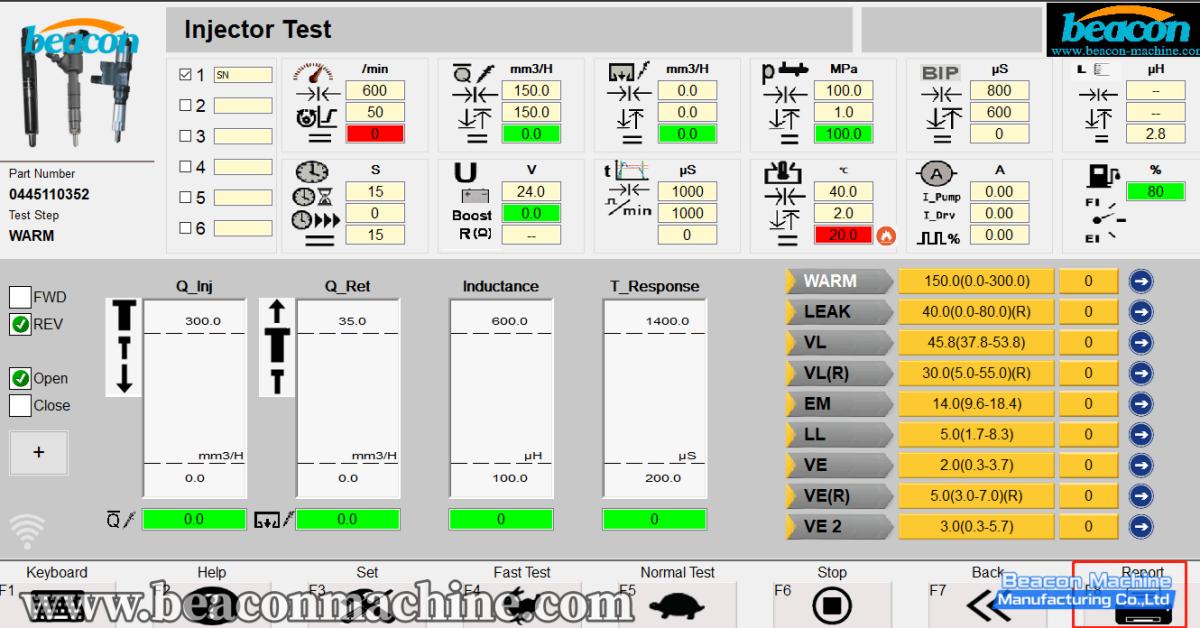
The Ultimate Guide to Common Rail Injector Testing: Diagnosis & Repair Logic
In the world of diesel repair, a Common Rail Injector Test Bench is your stethoscope. However, seeing a "Red (Fail)" or "Green (Pass)" light is not enough. To truly refurbish an injector to factory standards, you must understand the mechanical and hydraulic logic behind each test step: LEAK, VL, EM, LL, and VE.
This guide will walk you through what each step simulates in a real engine and how to fix the specific failures.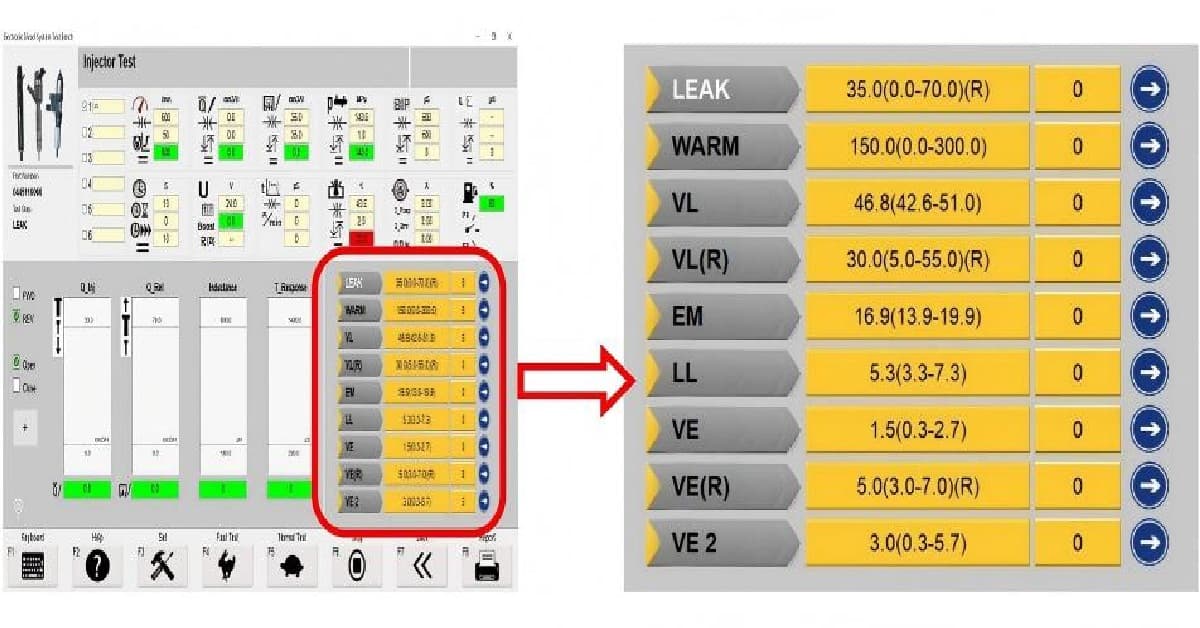
1. LEAK: High-Pressure Sealing Test
What it simulates: The injector's ability to hold rail pressure (up to 2500+ bar) when the engine is off or the injector is closed.
The Logic: The system pressurizes the injector without sending an electrical signal to the solenoid or piezo crystal.
Troubleshooting & Repair:
Fix: The valve assembly (F00V C01 383, etc.) must be replaced.
Fix: Clean the nozzle needle or replace the nozzle completely.
Tip Leak (Dripping): If fuel drips from the nozzle tip, the Nozzle Needle is not seating correctly.
Cap Nut/Body Leak: Fuel coming from the threads indicates failed O-rings or insufficient torque on the cap nut.
High Return Flow (Back Leak): This is critical. If return flow is high during the leak test, the Valve Ball is not sealing against the Valve Seat.
2. VL: Full Load Injection (Rated Power)
What it simulates: The engine running at maximum RPM and load (e.g., highway driving, heavy towing).
Test Condition: High Rail Pressure + Long Pulse Width.
Troubleshooting & Repair:
Cause: The Valve Stem is worn, allowing high-pressure fuel to bypass into the return line.
Fix: This is the most common cause of "Hard Start" issues. Replace the Valve Set.
Cause: Nozzle orifices are worn and enlarged. (Fix: Replace Nozzle).
Cause 1: Clogged Nozzle holes. (Fix: Ultrasonic cleaning).
Cause 2:Armature Lift (AH) is too small, limiting needle opening. (Fix: Adjust the shim to increase armature lift).
Cause 3: Needle lift is restricted.
Injection Volume Too Low: The injector is "starved."
Injection Volume Too High:
Return Volume Too High (VL-R):
3. EM: Emissions / Part Load
What it simulates: Normal city driving or cruising speeds. This ensures proper air-fuel ratio and clean emissions.
Test Condition: Medium Pressure + Medium Pulse Width.
Troubleshooting & Repair:
Volume Out of Tolerance: If VL is good but EM is bad, the issue is often in the Spring Tension or Air Gap.
Fix: Fine-tune the Solenoid Spring Shim. A thicker shim increases spring force, closing the valve faster and reducing injection quantity. A thinner shim does the opposite.
4. LL: Low Load / Idle Speed
What it simulates: The engine idling at traffic lights.
Test Condition: Low Pressure + Short Pulse Width.
Troubleshooting & Repair:
Cause: High internal friction. The solenoid doesn't have enough energy to overcome the friction at low pressure. Or, the Residual Air Gap is too small.
Fix: Check the movement of the armature. Ensure the Nozzle Needle moves freely. Adjust the Nozzle Spring Shim to ensure it's not too stiff for low-pressure opening.
No Injection / Low Volume:
Unstable Idle: Often caused by inconsistent delivery between cylinders.
5. VE & VE2: Pre-Injection (Pilot)
What it simulates: A tiny spray of fuel milliseconds before the main combustion. This "softens" the explosion, reducing engine noise (knocking).
Test Condition: Very Short Pulse Width (Microseconds).
Troubleshooting & Repair:
Check the Solenoid Actuator: If the resistance is out of spec, it reacts too slowly.
Adjust Armature Lift: If the lift is too high, the travel distance is too long for a short pulse. Reduce the lift slightly.
Failure Symptoms: If VE fails, the driver will complain of loud engine knocking or "clattering" noise.
Technical Fix: This is the hardest point to calibrate. It relies entirely on the Response Time of the solenoid.
Summary Checklist for Technicians
| Test Fail | Primary Symptom on Car | Most Likely Part to Replace/Adjust |
| LEAK (Return) | Hard Start / No Start | Valve Set (Ball & Seat) |
| LEAK (Tip) | White Smoke / Cylinder Wash | Nozzle |
| VL (Low) | Low Power | Shim Adjustment (Increase Lift) or Clean Nozzle |
| VL (Return) | Engine Shut off under load | Valve Set (Stem Wear) |
| LL (Idle) | Rough Idle / Shaking | Nozzle Needle Friction or Solenoid Gap |
| VE (Pilot) | Loud Knocking Noise | Solenoid Spring / Armature Lift |
Conclusion
A test bench gives you the data, but your expertise solves the problem. By analyzing the specific failure points (VL, EM, LL, VE), you can pinpoint exactly which shim to adjust or which component (Nozzle vs. Valve) needs replacement, ensuring a 100% success rate in your repairs.
Related products
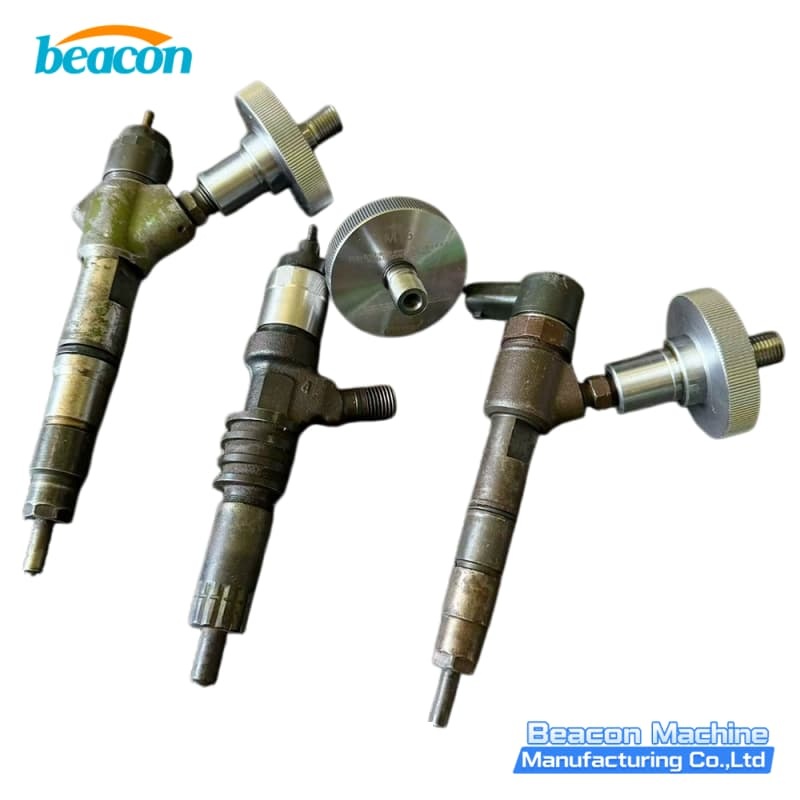
G12-13 M12 M14 M16 Diesel Injector Quick Connector Adapter Set
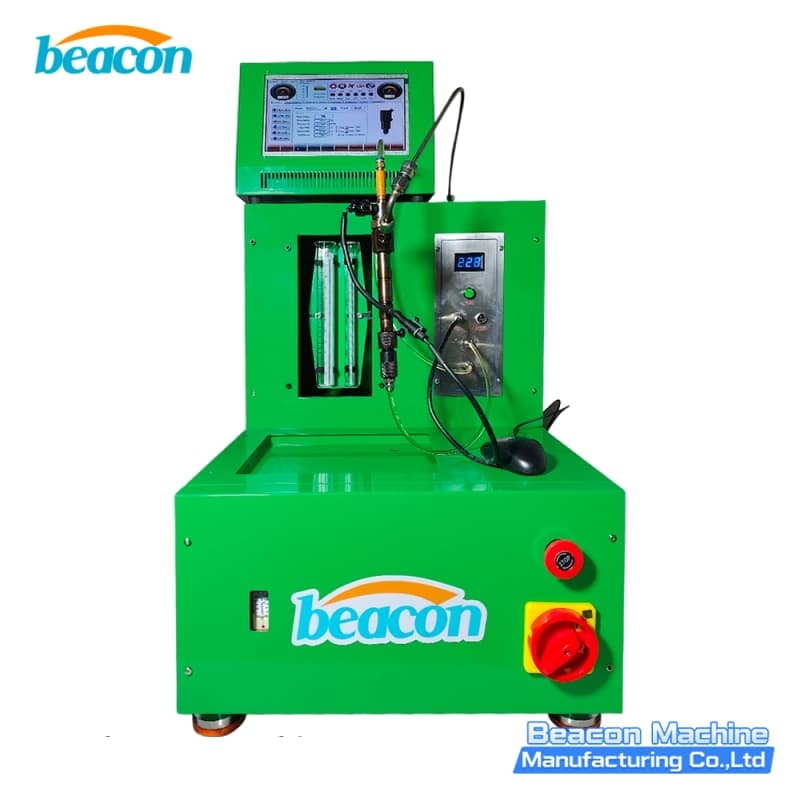
EPS109 Common Rail Diesel Injector Test Bench with CRS930 System
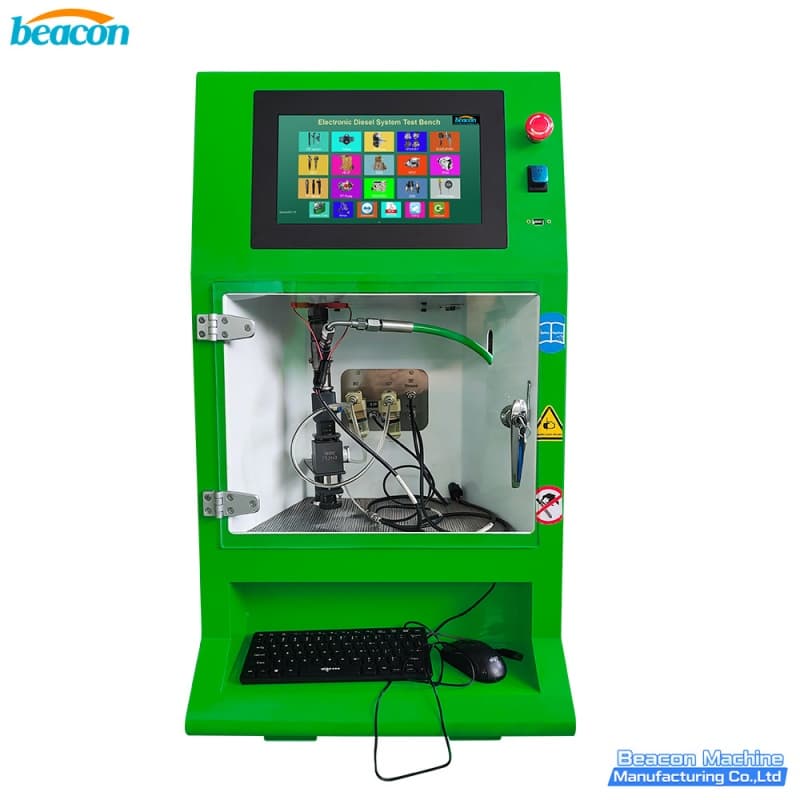
EPS212 Common Rail Injector Test Bench
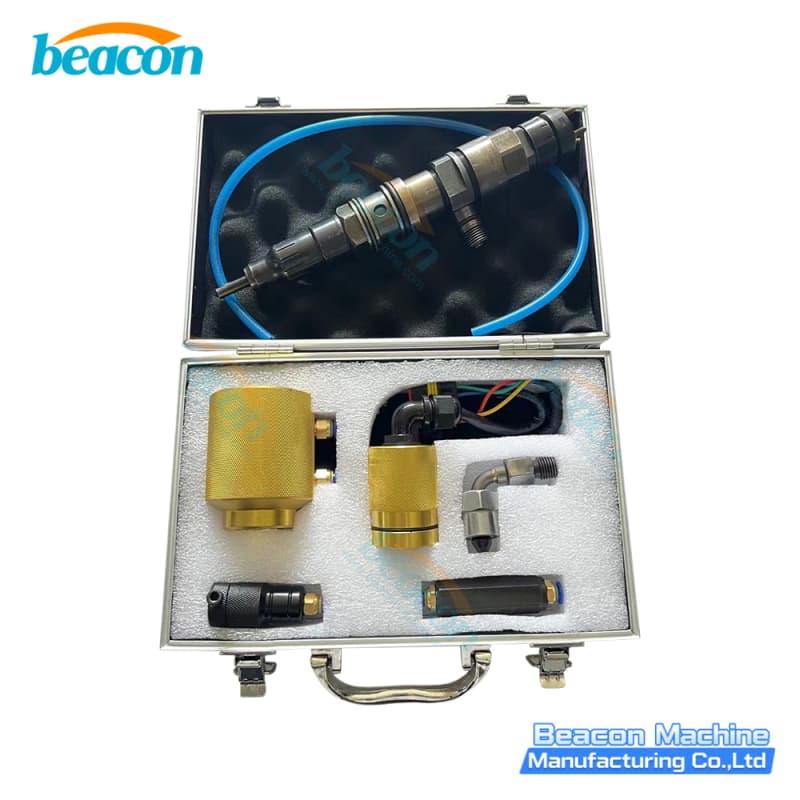
Bosch 4.2 MP4 Injector Testing Kit with 4-Pin Cable Oil Collector
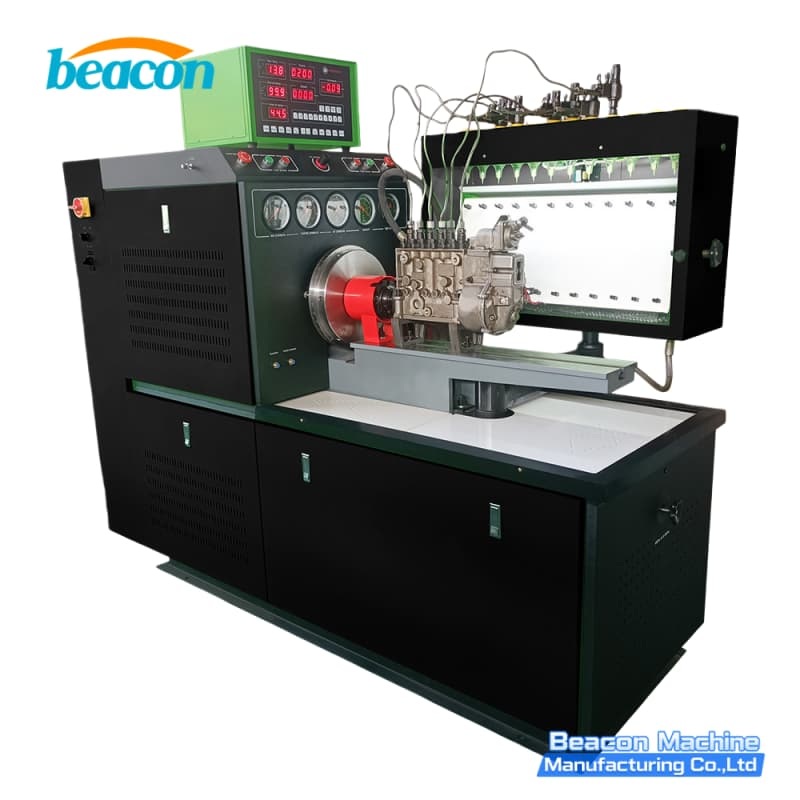
ES619 Diesel Fuel Injection Pump Test Bench (12 Cylinder)
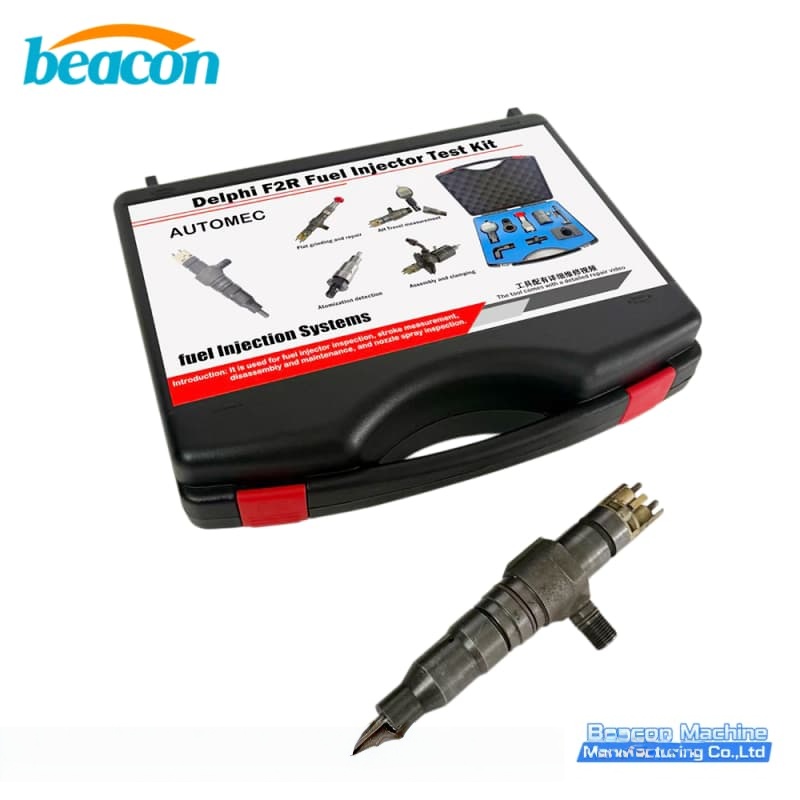
G4-82 Delphi F2R Injector Repair Tool Oil Return Clamp Fixture Adaptor
contact us
TEL: +86-13375386258
Whatsapp:+86-13375386258
Email: jasonzheng@beacon-machine.com
Address: High Tech Industry Zone of East Tai an city,Shandong Province,China